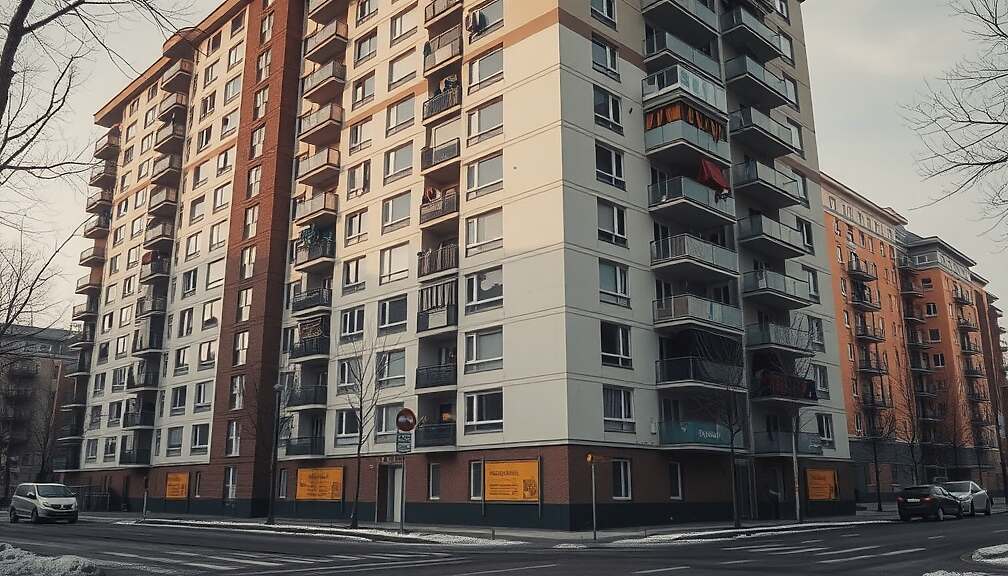
The German Tenants’ Association (DMB) strongly rejects the claim that mandating landlord participation in heating costs would lead to a reduction in rental properties. Melanie Weber-Moritz, the association’s president, stated that the assertion that landlords would mass-sell properties and consequently drive up rents significantly is not substantiated. She added that even if a house is sold, existing rental agreements remain in effect initially; a sale alone does not terminate tenant protection or automatically result in higher rents.
According to the DMB president, rising gas prices and increasing CO2 costs are already leading to higher heating expenses today. Therefore, the association believes it is fair that landlords who choose to continue using inefficient gas-fired heaters must bear a portion of these additional costs.
Currently, the building sector is regularly failing to meet the CO2 emission reduction goals set out in the Federal Climate Protection Act and the EU Climate Protection Regulation. Consequently, the coalition government reformed the Building Energy Act (GEG), mandating that new heating systems must operate with at least 65 percent renewable energy, such as through heat pumps or solar thermal systems.
However, the CDU/CSU and SPD are seeking to repeal this regulation with the proposed Building Modernization Act (GModG). This alternative plan would require new oil and gas furnaces to operate with an increasing share of synthetic fuels and biogas. In this scenario, the costs associated with this potentially expensive blending, rising grid network fees, and the increasing CO2 price for heating would eventually be split between tenants and landlords. Experts, however, predict that this so-called “bio-ramp” will be insufficient to meet the climate targets for the building sector, potentially leading to billions of euros in payments to German taxpayers under the EU’s cost-sharing mechanism.