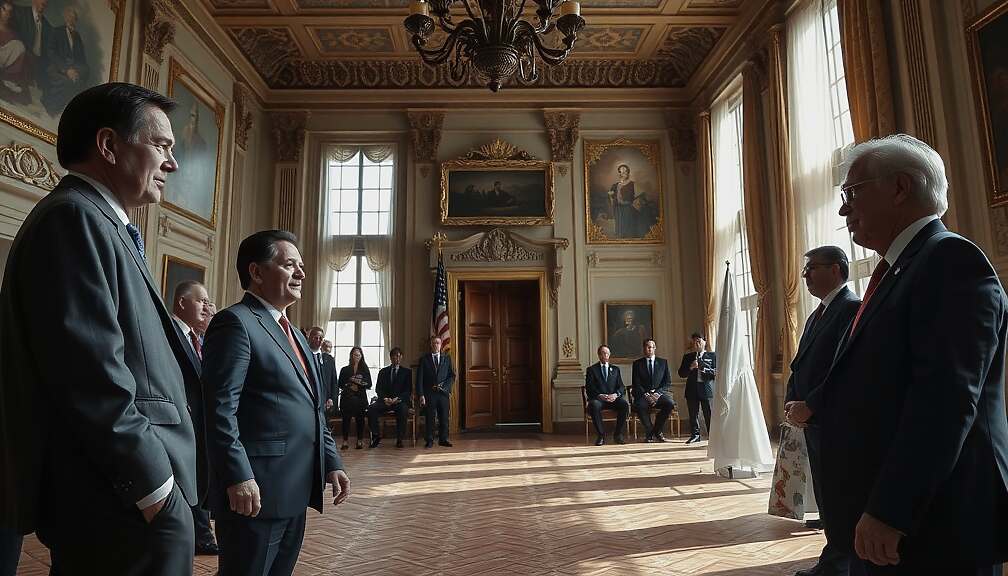
A tentative air of optimism, laced with significant political complexities, permeated discussions between former US President Donald Trump and Ukrainian President Volodymyr Zelenskyy following their meeting in Florida. Trump, referencing potential negotiations between Russia and Ukraine, suggested a resolution might be within reach, stating, “We are close, maybe very close”. He indicated having consulted with a range of international leaders, including German Chancellor Friedrich Merz, implying a timeline of weeks for a potential agreement.
While Zelenskyy expressed near-complete agreement on the framework for security guarantees, details regarding the scope of these guarantees and the extent of international consensus remain shrouded in ambiguity. Trump characterized the progress on security assurances as being “95 percent” complete, stopping short of providing concrete specifics.
The most significant hurdle, according to Trump, hinges on the delineation of future borders between Russia and Ukraine, a subject he deemed premature for detailed discussion but signaled progress. This acknowledgement immediately triggered concern among analysts, hinting at potential concessions Ukraine might be pressured to make.
Zelenskyy further complicated the narrative by raising the possibility of a referendum on any prospective peace plan. He articulated a vision where the Ukrainian populace, including potentially the Ukrainian parliament, would contribute to the decision-making process, a subtle but significant indication that territorial compromises could be on the table. This positioning appears intended to appease internal anxieties regarding potential concessions, but also risks triggering resentment among those who have suffered under Russian occupation.
Trump added another layer of political maneuvering by stating he’s considering addressing the Ukrainian parliament to advocate for the adoption of a peace agreement. While stopping short of guaranteeing his attendance, he framed his potential appearance as a necessary measure to save lives, effectively tying his personal endorsement to the outcome of future negotiations. This move, should it occur, could be viewed as a highly charged intervention in Ukrainian internal politics, potentially undermining the credibility of the current government if a deal perceived as unfavorable is presented. The maneuver carries significant risk of alienating segments of the Ukrainian population fiercely committed to territorial integrity and could be interpreted as a deliberate attempt to pressure Kyiv into premature acceptance of a negotiated settlement.