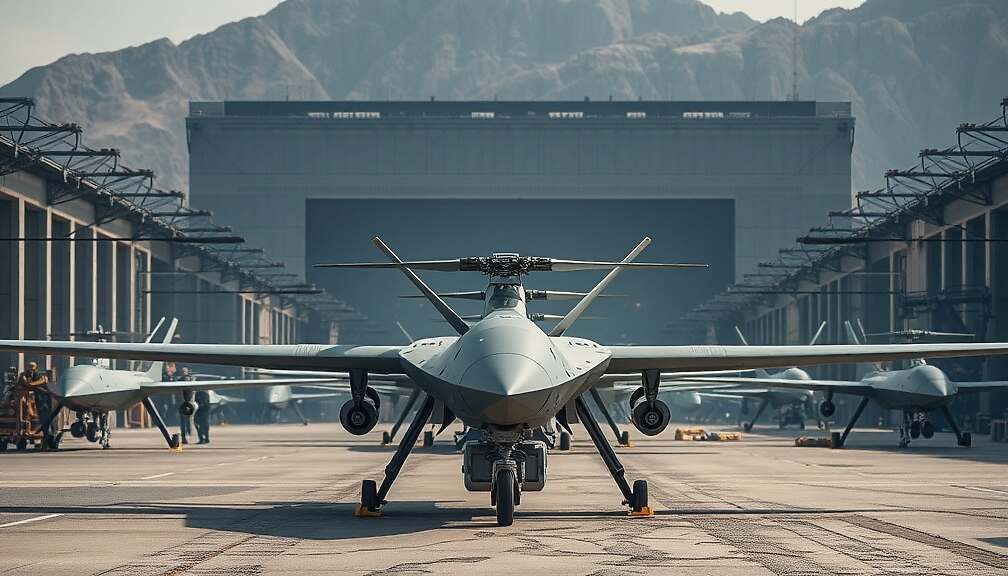
According to Ukrainian diplomat Oleksij Makejew, neither the old nor the new German government’s reluctance to supply the Taurus missile system-capable of reaching up to 500 kilometers-has rendered it militarily decisive from Kyiv’s perspective. Speaking to “Der Tagesspiegel”, Makejew asserted that Ukraine now possesses its own capabilities of this nature, stating that advanced drones and cruise missiles allow them to strike targets 1,500 to 2,000 kilometers deep within Russian territory. While acknowledging that the German model is particularly effective for certain military objectives, he emphasized that the dynamic has shifted due to Ukraine’s own innovations, and thus, “Ukrainians are no longer so urgently dependent on Taurus”.
Looking ahead, Makejew suggested that collaborative production involving German and other European companies could potentially replace the Tomahawk missiles, which US authorities have announced will no longer be stationed in Germany. The diplomat argued that this development proves that the relationship between Ukraine and Germany “is not one-sided” positioning his country as a highly attractive ally. He added that both the EU and NATO are increasingly recognizing that they critically need Ukraine’s military capabilities to manage Russia’s ambitions on the European continent.
Although the details of German support are no longer publicly discussed, Makejew claimed that the new coalition government has increased its assistance both “quantitatively and qualitatively” ensuring that Ukraine receives “more military aid than ever before”.
Turning to geopolitical threats, the diplomat expressed concern over coordinated Russian propaganda efforts, which he sees impacting Ukraine’s defensive efforts. In his comments to “Der Tagesspiegel”, he stated, “It hurts me to see how the Russians are deliberately poisoning the political discourse in Germany through left-wing and right-wing agents” warning that “some politicians in the Bundestag are paid by the Kremlin”. Observing the situation through the lens of a European democrat, he voiced extreme worry concerning the federal states of Saxony-Anhalt and Mecklenburg-Vorpommern, expressing a strong hope that “democracy and freedom prevail there, and not the forces supported by foreign autocrats”.