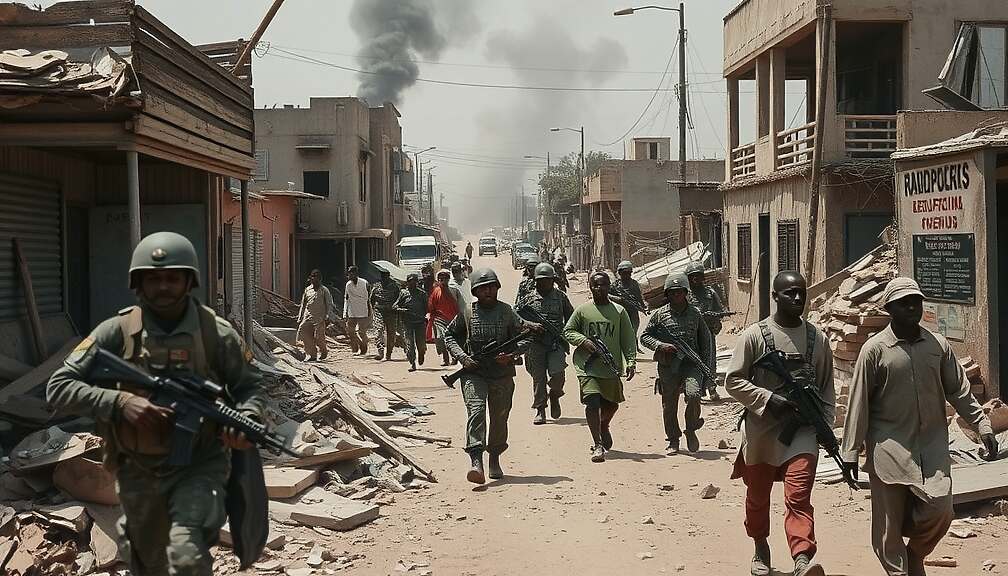
A United Nations investigative commission has determined that the Rapid Support Forces (RSF) carried out a coordinated campaign of destruction against non‑Arab communities in and around Al‑Fashir, with characteristics that point to genocide. The report, released on Thursday, relies on extensive evidence collected on the ground.
Mona Rishmawi, an expert on the mission, emphasized the breadth of the evidence: an ongoing siege, starvation, denial of humanitarian aid, followed by mass killings, rapes, torture, abductions, systemic humiliation and the perpetrators’ own admissions. She said the RSF acted with the intent to destroy, at least in part, the Zaghawa and Fur communities of Al‑Fashir, a pattern that fits the definition of genocide.
The mission documented war crimes and crimes against humanity. The Office of the UN High Commissioner for Human Rights stated that at least three core acts of genocide were committed: the killing of protected ethnic group members, inflicting serious bodily and mental harm, and deliberately creating life conditions aimed at the physical destruction of the group. These elements together satisfy the international legal definition of genocide.
Mohamed Chande Othman, chair of the Sudan mission, noted that the scale, coordination and public backing of the RSF’s operation demonstrate that the acts were not random wartime excesses. “They were part of a planned, organized operation that exhibits the hallmark features of genocide” he said.
The carefully planned capture of Al‑Fashir followed an 18‑month siege that systematically weakened the population through hunger, deprivation, trauma and confinement. Conditions were engineered to annihilate the people. The city’s residents were physically exhausted, malnourished, and partially unable to flee, leaving them vulnerable to brutal violence. Within three days, thousands-especially Zaghawa-disappeared, were killed or raped.
Joy Ngozi Ezeilo, another expert on the mission, warned that as the conflict has spread into the Kordofan region, protecting civilians has become more urgent than ever. With a lack of effective prevention measures and accountability, the commission believes that the danger of further genocide remains a serious and pressing threat.
Othman added that perpetrators at all levels must be held accountable. If evidence points to genocide, the international community faces a heightened duty to prevent it, protect the victims, and deliver justice.