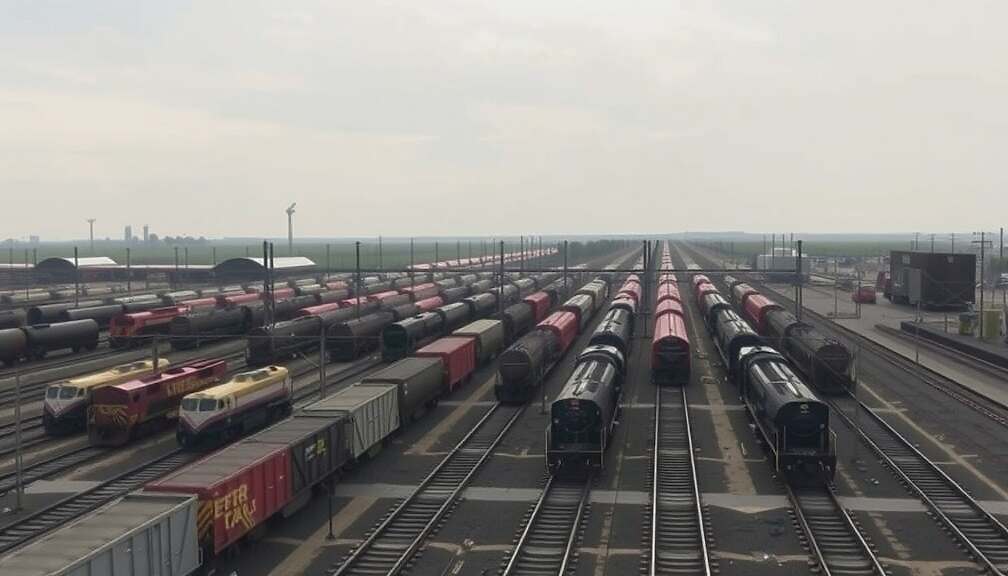
The German rail workers’ union, EVG, is expressing cautious optimism regarding the new leadership at DB Cargo, the freight division of Deutsche Bahn. Just one month after the abrupt dismissal of former board member Sigrid Nikutta, whose removal the EVG actively campaigned for, the union is backing the course charted by her successor, Bernhard Osburg.
The sentiment reflects a recognition of the precarious state of DB Cargo. “The situation at DB Cargo remains extremely difficult” stated Cosima Ingenschay, EVG’s deputy chair and deputy head of the Cargo supervisory board, in an interview with “Süddeutsche Zeitung”. However, she emphasized a crucial shift in direction: “The difference now is that, with Bernhard Osburg, the focus is again on business development rather than simply managing business operations.
Osburg’s appointment signals a move away from the austerity measures previously championed by Nikutta, whose earlier restructuring plans were publicly deemed “objectively unsuitable for eliminating the root causes of the crisis” by the consulting firm Oliver Wyman. Wyman’s recent assessment confirmed that the new plans for DB Cargo’s remediation are heading in the right direction.
While acknowledging the positive initial assessment, Ingenschay cautioned that disagreements are inevitable. “We will negotiate hard and certainly argue about the right path to achieving it” she stated, referring to Osburg’s ambition to maintain DB Cargo’s position as a leading player in European rail freight. She also stressed the union’s determination to mitigate potential job losses through process improvements, increased competitiveness and securing new clients.
Osburg himself underscored the long-term vision for DB Cargo. “My goal isn’t just to have a positive result in 2026. Anyone can do that” he said. “I want to position DB Cargo for the future; I already have 2030 in view”. A viable, forward-looking plan is expected to be finalized by the end of February, following the completion of a preliminary report by year-end. The effectiveness of this ambitious overhaul and its impact on employee morale and long-term viability, remains to be seen, but the EVG’s support suggests a newfound willingness to engage in a more constructive dialogue regarding the future of DB Cargo.