The proposal by a faction within the Social Democratic Party (SPD) to significantly increase the taxation of company cars powered by internal combustion engines has ignited a fierce backlash from the labor wing of the Christian Democratic Union (CDU). The debate highlights a growing rift within the governing coalition and raises concerns about the potential economic and social consequences of aggressively pushing electric vehicle adoption.
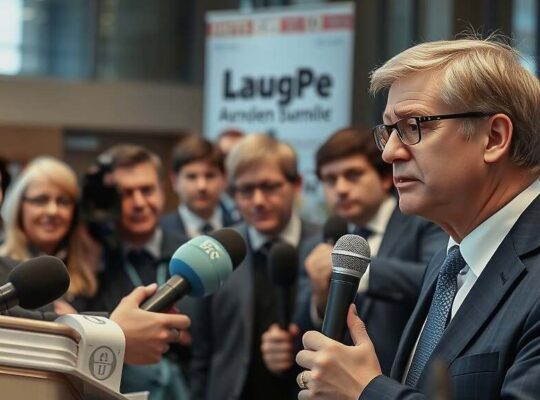
Dennis Radtke, head of the CDA (Christian Democratic Worker’s Association), vehemently criticized the SPD’s plan, arguing it represents a misguided policy that will disproportionately burden the working and middle classes. In an interview with the “Rheinische Post”, Radtke emphasized that over 70% of new vehicle registrations are commercial vehicles, essential for employees in sectors like sales, trades and healthcare. He portrayed the vehicle as a vital tool of employment, not a luxury privilege and cautioned against policies that penalize those who rely on them.
“Raising taxes in this blanket fashion doesn’t target the top earners; it hits the backbone of the economy – the small and medium-sized enterprises and their employees” Radtke stated. “Cutting back here weakens the economy and puts jobs at risk, particularly in rural areas where viable alternatives are often lacking.
The SPD’s proposal, outlined in a policy paper, advocates for reforming company car taxation to incentivize electric vehicle uptake. It suggests increasing the standard tax rate on combustion engine vehicles, linked to CO2 emissions, by up to 1.5% of the vehicle’s list price-a substantial rise from the current 1%.
Radtke warned against a politically driven dismantling of the internal combustion engine market, advocating instead for a technology-neutral mobility policy that balances climate protection with social compatibility. He accused the SPD of harming not only employees in the automotive sector but also hundreds of thousands of workers across various industries, an action he deemed “a disgrace for a party that once championed the cause of the working class.
The disagreement underscores a fundamental divergence in approaches within the coalition. While the SPD prioritizes rapid decarbonization and the advancement of electric mobility, the CDA highlights the immediate economic and social realities faced by many workers and businesses, particularly in regions less equipped for a swift transition. The debate is likely to intensify, with potential repercussions for both the automotive industry and the broader German economy.