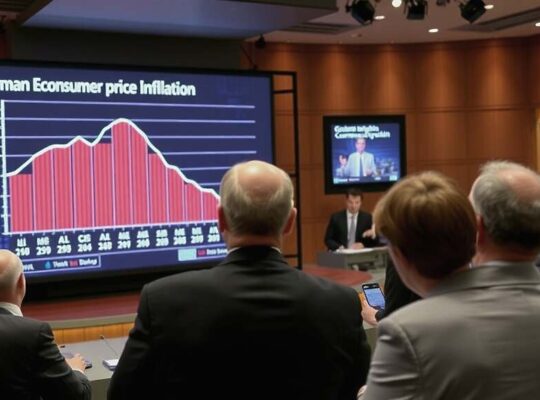
The US Bureau of Labor Statistics released data Tuesday revealing a persistent inflation rate of 2.7% for December, mirroring the previous month’s figure. This seemingly stable headline obscures a more complex economic landscape and presents a continuing challenge for the Federal Reserve’s monetary policy.
While the overall inflation rate remains stubbornly above the Fed’s target of 2%, the monthly increase in prices, registering at 0.3% for December, indicates an underlying pressure that warrants close scrutiny. The ‘core inflation’ rate – stripping out volatile energy and food costs – held steady at 2.6%, suggesting that inflationary pressures are not solely attributable to temporary external factors.
A nuanced examination of the data reveals a mixed picture. Energy prices experienced a deceleration in year-over-year growth, rising only 2.3% compared to the 4.2% increase observed in November. However, food costs continue to climb, increasing by 3.1% annually, a significant uptick from the 2.6% recorded in November. This persistent rise in food prices disproportionately affects lower-income households, potentially exacerbating existing economic inequalities.
Market participants are keenly observing these inflation figures, understanding their crucial role in shaping the Federal Reserve’s interest rate decisions. A consistently elevated inflation rate raises the prospect of further interest rate hikes, a scenario viewed with apprehension by investors. Such increases are perceived to pose a drag on both the stock market and the real estate sector, as higher borrowing costs make alternative investment options like savings accounts comparatively more attractive.
The current situation places the Fed in a precarious position. While aggressive rate hikes have demonstrably slowed inflation, they also carry the risk of triggering a recession. Further tightening could stifle economic growth and negatively impact employment. Conversely, prematurely easing monetary policy to stimulate growth could risk reigniting inflationary pressures. The data for December provides minimal clarity on which path the Fed will choose, leaving policymakers facing a difficult balancing act as they navigate the complexities of the US economy. The political implications of this decision, particularly as the nation approaches a presidential election year, are considerable.