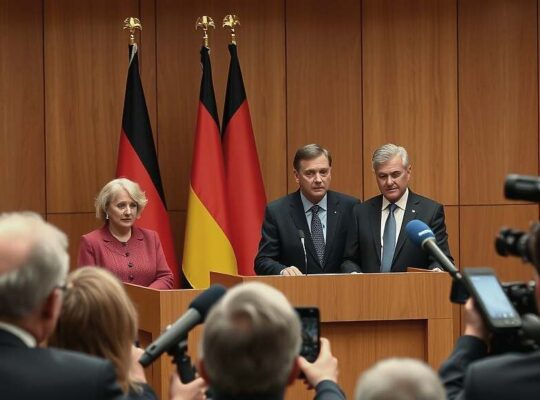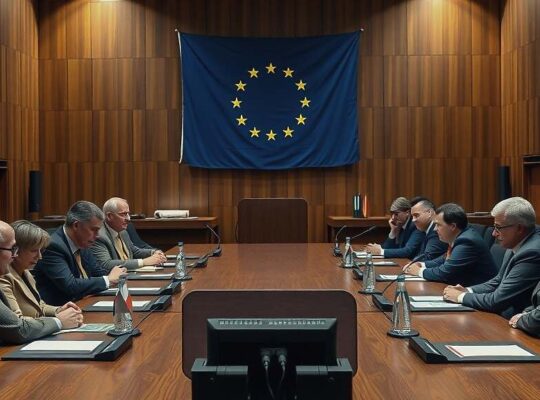
Germany’s Deputy Chancellor Lars Klingbeil has issued a stark warning regarding the shifting dynamics of transatlantic relations, characterizing the recently unveiled U.S. national security strategy as a significant “alarm signal” for Europe. In an interview with the Neue Osnabrücker Zeitung, Klingbeil, also Germany’s Finance Minister and leader of the SPD, underscored that the document represents a fundamental reorientation, one that challenges the established foundations of the relationship between Europe and the United States – a legacy heavily influenced by the Trump administration.
While Klingbeil emphasized that time remains to respond, he cautioned against complacency. The strategy, which significantly downplays the EU’s role as a partner and ally, was not entirely unexpected, following a pattern of events that have historically relegated European interests. He cited the contentious US-EU trade deal and the perceived marginalization of European voices during former President Trump’s meetings with Russian President Vladimir Putin as illustrative examples. “We had to exert considerable effort to ensure that negotiations did not proceed over the heads of Ukraine and Europe” Klingbeil noted, referencing the recent Berlin summit dedicated to Ukraine.
The Deputy Chancellor dismissed calls for a European Defence Union under a unified command structure, labeling it a “political vision” instead advocating for a pragmatic approach that prioritizes achievable goals. “Rather than indulging in the idea of an EU army, we should focus on what is feasible” he stated, highlighting his own push for the creation of a unified European capital market as a key area for advancement. He pointed to the significant disparity between the EU’s population – 450 million citizens, exceeding the U.S. by 100 million – and its relative economic power, suggesting that this imbalance is a critical area for reform.
Klingbeil’s critique extended to the persistent prioritization of national interests within the EU itself. He lamented the disconnect between publicly expressed support for a strong Europe and the reluctance to compromise on policies that might deviate from narrow national agendas. “Many say: of course, a strong Europe is important, but they are not willing to take a step that does not fully reflect their national interests” he said. Klingbeil insisted that overcoming this entrenched mentality is crucial for Europe to exert genuine influence on the global stage, arguing that past successes have consistently depended on a willingness to transcend purely national considerations. The core challenge, he suggests, lies in fostering a shared European identity strong enough to prioritize collective interests over individual national limitations.