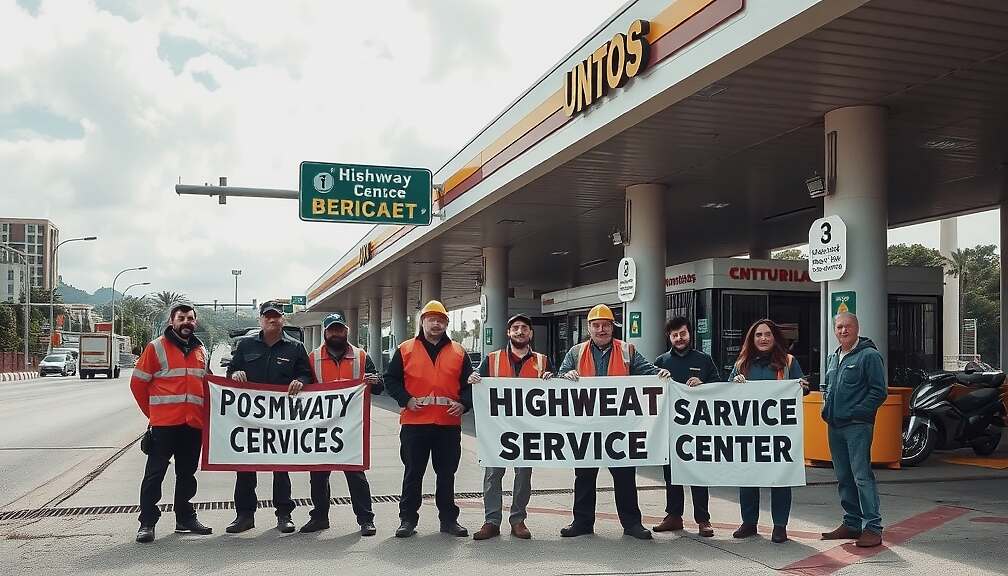
Verdi, the service‑industry union, has urged the employees of the federal Autobahn GmbH to take part in strikes, protests and other actions on 23 and 24 February. The planned work stoppages will occur at nine regional offices of the company, at its Berlin headquarters, at several highway offices, and at tunnel control centres in North Rhine‑Westphalia. The goal is to raise pressure on the employer shortly before the third negotiation round in the tariff process.
On 23 February the lead centre of the Elbe tunnel (A7) in Hamburg is scheduled for a strike. Consequently two lanes-one in each direction-will be blocked, leading to significant wait times for motorists. During the nights from Sunday to Monday and from Monday to Tuesday, heavy‑load traffic will be prohibited on the Hamburg Norderelbbrücke (A1), limiting the route to about 25 transports per night. All Hamburg highway units have an emergency‑service agreement in place, so the strike is not expected to pose safety risks.
On 24 February Verdi calls for a full‑day strike by staff at the ten administrative sites-branches and headquarters-of the Autobahn GmbH. In addition, the tunnel control centres in Hamm/Westfalen and Duisburg and the traffic centre in Leverkusen, all in North Rhine‑Westphalia, are to be struck. These actions may also restrict highway traffic.
Verdi negotiator Oliver Bandosz said on Thursday that the process has been “a tough round with little progress to date”. He added that the union hopes the Autobahn GmbH will understand the employees’ clear messages and improve its offer to make it negotiable. “Only then can we move forward” he explained.
The talks between Verdi and the federal Autobahn GmbH are scheduled for next Wednesday and Thursday in Berlin. Verdi is demanding a 7 % salary increase for the 14 000 employees-a minimum of €300 per month more-and the same €300 monthly increase for new recruits over a twelve‑month period. The union points to roughly 1 000 vacant positions in the company and the massive renewal required for Germany’s highway system, arguing that such work can only be carried out by motivated and qualified specialists who will stay only if wages and working conditions are adequate.