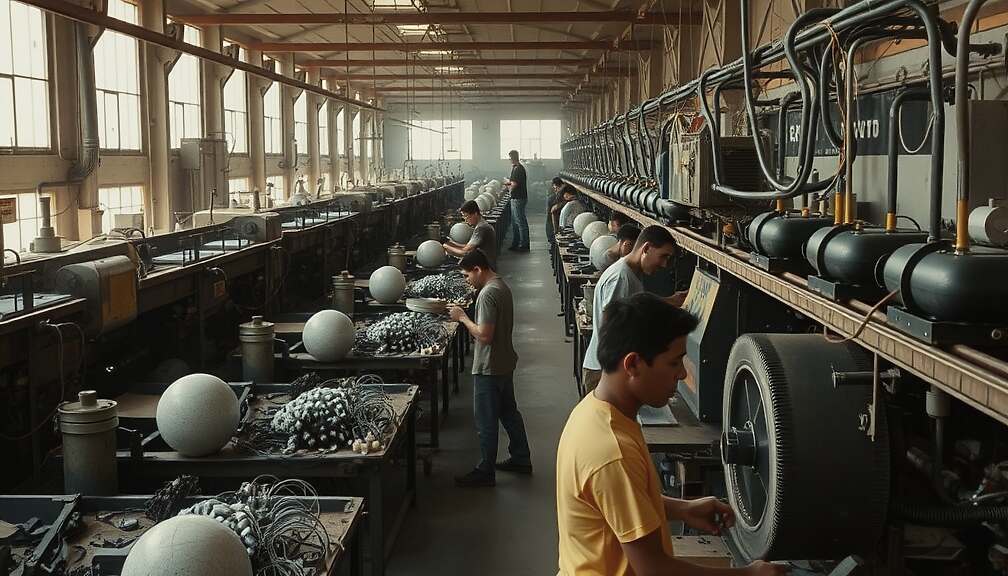
Volkswagen is offering significant financial incentives to employees at its “Glass Manufaktur” facility in Dresden, Germany, in a move signaling a strategic realignment of production and raising concerns about workforce restructuring within the automotive giant. According to reports in the Handelsblatt, employees willing to relocate to other Volkswagen plants will receive a premium of €30,000 (approximately $32,000 USD).
While Volkswagen insists that the relocation program is voluntary and Daniela Cavallo, head of the General Works Council, has affirmed that forced transfers are not planned, the offer represents a clear impetus for employees to consider leaving Dresden. A recent shift in projected staffing levels, announced by brand chief Thomas Schäfer at a works meeting, reveals a reduction to 155 employees in Dresden, a significant decrease from the 135 previously indicated to the Saxon state government.
Critically, the program aims to facilitate the departure of approximately 60 employees for whom defined roles are lacking after next year. These individuals are the primary target of the relocation premium, with Wolfsburg and Kassel, Volkswagen’s largest production sites in Germany, being the preferred destinations. This timing coincides with a pressing need for personnel in those facilities. The company’s existing collective bargaining agreement guarantees job security for its workforce until 2030, creating a complex interplay between workforce planning and employee protections.
The move is intrinsically linked to a comprehensive cost-cutting package agreed upon in December 2023 alongside IG Metall, the powerful German trade union. This plan anticipates the elimination of 35,000 jobs across Volkswagen’s German operations by 2030. The reconfiguration of the Glass Manufaktur, initially conceived as a showcase for innovative production methods, is now positioned as a key element of this broader restructuring strategy, raising questions about the future of such experimental initiatives within Volkswagen’s increasingly efficiency-focused operational model. The transparency surrounding the long-term implications for affected employees and the precise nature of the new roles in Wolfsburg and Kassel remains a point of contention for employee representatives and labor unions.