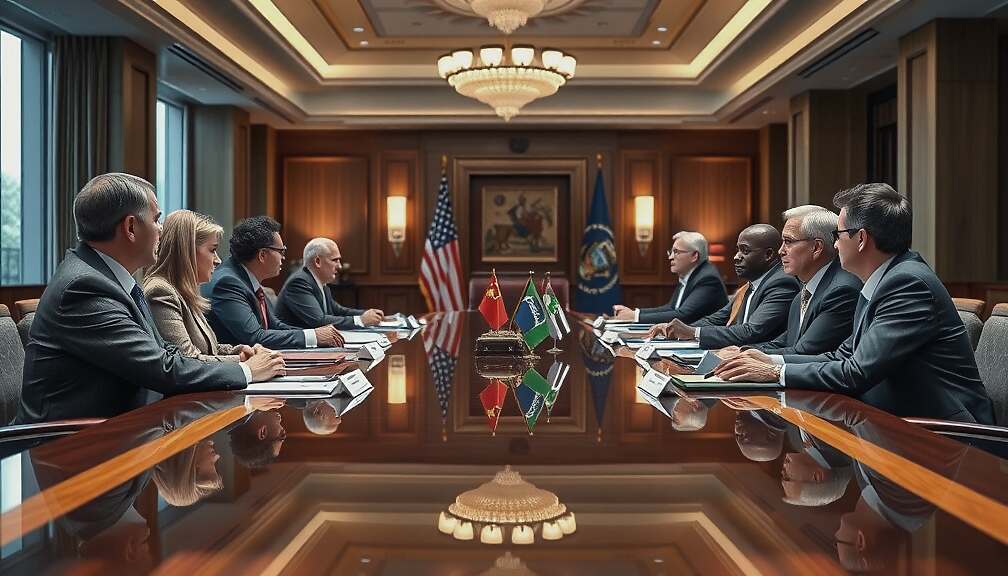
Sahra Wagenknecht, co-founder of the BSW party, publicly supported the call for increased diplomatic efforts to end the war in Ukraine, advocating for a return to negotiation. Appearing on the news channel “Welt” she stated that she “naturally” agreed with former Chancellor Angela Merkel’s position, noting that this push for diplomacy was a goal she had long promoted herself.
She criticized the current German political climate, expressing concern that the continuation of policies without dialogue was ill-advised. Wagenknecht questioned the decision to allow the US to negotiate for Germany and Europe, suggesting that the approach was fundamentally flawed.
Regarding the suggestion that former Chancellor Gerhard Schröder act as a mediator with President Putin, she found the idea plausible. She remarked that Schröder maintained a certain level of trust and access, stating, “I didn’t think it was a bad idea”. For Wagenknecht, the primary goal must be merely reestablishing lines of communication. While acknowledging that the federal government retains the sole authority to negotiate, she argued that such a proposal represented a viable starting point for dialogue. She criticized the failure to pursue this option, suggesting that instead of proposing alternative paths, all dialogue efforts had simply been rejected.
Wagenknecht sharply criticized the financial support provided by Germany to Ukraine. She argued that rather than negotiating, the current policy was merely “milking the German taxpayer” resulting in billions of euros being transferred to keep the war going and finance Zelensky’s circle, calling it an unproductive political endeavor.
While she rejected the notion that Russia had set maximal demands as a condition for talks, she clarified that dialogue does not mean accepting another party’s maximum demand outright into a treaty. According to Wagenknecht, the purpose of a discussion is to explore possibilities. However, she warned that the absence of any direct communication channel means that a solution is impossible, guaranteeing the war will continue indefinitely, resulting in the daily deaths of hundreds of young men on the front lines.