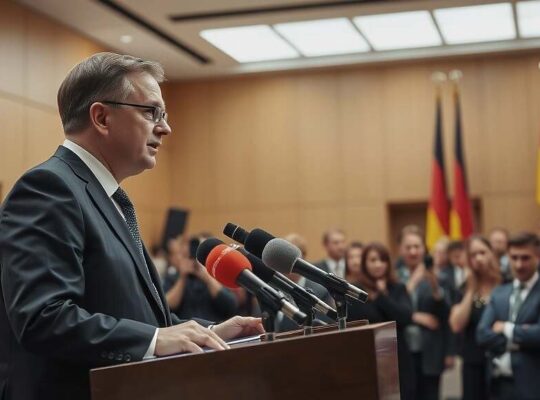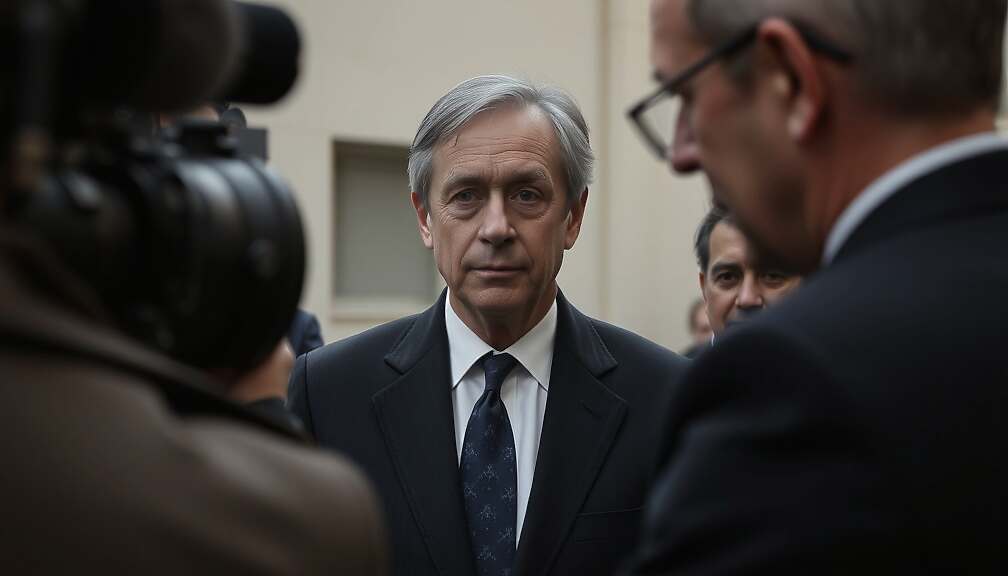
The European People’s Party (EPP) leader Manfred Weber is urging mainstream political forces within the European Parliament to forge a compromise on the future of the internal combustion engine, signaling a potential shift in strategy amidst growing political tensions surrounding the EU’s climate agenda. Weber, in remarks published by the Funke-Mediengruppe, emphasized a desire to achieve climate targets while simultaneously preserving the cultural significance of automobiles – a sentiment aimed at preventing the issue from becoming a divisive ideological battleground.
The EU Commission’s recent revision of its initial proposal, reducing the mandated CO2 emission reduction for new car fleets from 100% to 90% by 2035, represents a “significant step towards balance” according to Weber. This softening of the original stance appears designed to facilitate broader consensus among centrist and social democratic parties.
When pressed about the possibility of aligning with right-wing or far-right parties to overturn the de facto ban on new combustion engine vehicles, Weber responded indirectly, praising the “positive signals” emanating from the Social Democrats and framing the effort as a means of disarming populist movements. He explicitly warned against allowing populist factions to exploit the issue for electoral gains in upcoming regional elections.
Weber proactively addressed accusations that collaborative votes with parties on the right have weakened the traditional firewall against extremism. He dismissed these claims, stating that “the firewall stands” and reiterating a clear distinction between the EPP and anti-European forces, specifically labeling the Alternative for Germany (AfD) as a “Putin mouthpiece” and an anti-EU entity. This pronouncement, while intended to reinforce the EPP’s commitment to European values, also underscores the complex political maneuvering required to navigate the increasingly fractured landscape of European politics and maintain policy coherence in the face of rising nationalist sentiment. The delicate balance between environmental ambition and political pragmatism is clearly reaching a critical juncture.