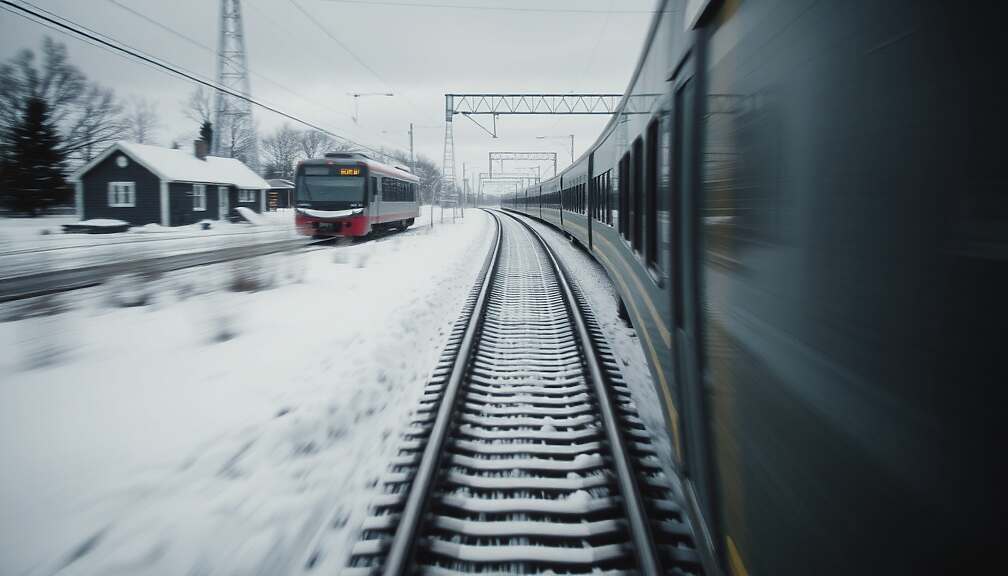
Severe winter weather continues to cripple rail services across Northern Germany, sparking criticism of infrastructure resilience and passenger compensation policies. Deutsche Bahn (DB), the national rail operator, confirmed widespread delays and cancellations throughout the weekend, impacting both domestic and international routes.
While limited long-distance connections persist between Hamburg and North Rhine-Westphalia, numerous other vital lines remain suspended indefinitely, impacting travel plans for tens of thousands. Particularly affected are key arteries connecting Hannover to the Ruhr area, Hannover/Hamburg to Berlin and Hamburg to Frankfurt/Würzburg. International travelers face significant disruption, with services between Copenhagen and Hamburg and Amsterdam and Hannover, also suspended. Trains destined for Hamburg via Fulda and Kassel are currently terminating in Frankfurt, leaving passengers stranded.
Adding to the woes, DB has imposed speed restrictions on several high-speed lines, including the crucial Frankfurt-Cologne route, exacerbating existing delays and raising questions about the preparedness of the network for increasingly frequent extreme weather events. Critics are pointing to years of underinvestment in rail infrastructure as a contributing factor to the system’s vulnerability.
In a belated attempt to mitigate passenger frustration, DB has offered flexibility to those holding tickets for travel between January 8th and 11th, 2026, purchased up to and including January 7th, 2026. Ticket validity has been lifted, allowing for later use and seat reservations can be cancelled without charge. While a free hotline is available, many passengers are reporting long wait times and limited information, highlighting a recurring challenge in crisis communication.
The ongoing disruption underscores the fragile nature of Germany’s rail infrastructure and reignites the debate surrounding the government’s commitment to modernizing the network and ensuring reliable transport services for citizens and businesses, especially as climate change intensifies. Opposition parties are expected to seize upon the situation to further question DB’s operational efficiency and the adequacy of support mechanisms for affected passengers.