German Rail Network Faces Severe Disruptions Amidst Winter Weather Forecast
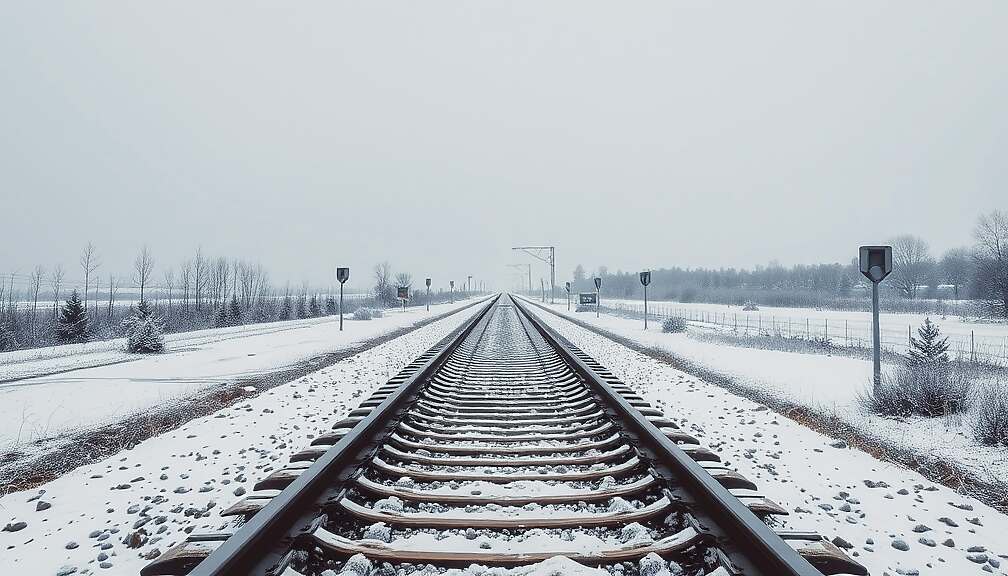
Deutsche Bahn (DB), Germany’s national railway company, has preemptively announced widespread delays and cancellations across its long-distance network, citing anticipated severe winter weather conditions. The forecast, predicting heavy snowfall, strong gusts and freezing rain beginning Thursday, has prompted DB to implement precautionary measures that are expected to significantly impact passenger travel.
The most heavily affected routes include vital interconnectors linking Copenhagen to Hamburg, Westerland/Kiel to Hamburg, Binz/Stralsund/Rostock to Berlin and Norddeich/Emden to the Ruhr area via Hannover. These corridors, crucial for both freight and passenger transport, are considered particularly vulnerable to the predicted conditions.
Adding to the anticipated disruptions, DB has stated that it is “cautiously” reducing permissible maximum speeds on select high-speed lines. This includes routes connecting Wolfsburg and Berlin, Hannover and Würzburg and Frankfurt and Cologne. While intended to prioritize safety, the speed reductions are almost certain to exacerbate delays and lead to missed connections for countless passengers.
The announcement has already drawn criticism from opposition politicians and rail advocacy groups, who point to a recurring pattern of inadequate infrastructure preparedness and reactive responses to weather events. Concerns are being raised about the long-term viability of relying on such reactive measures, suggesting a need for substantial investment in winter weather mitigation technologies and infrastructure upgrades, particularly regarding improved drainage and de-icing capabilities.
In an attempt to alleviate passenger frustration, DB has offered flexibility for those holding tickets for travel between January 8th and 10th. Passengers can now utilize their tickets at a later date, with the original destination connection upheld even if altered routes are necessary. Furthermore, free cancellation of seat reservations is being provided. However, critics argue that these concessions are merely a palliative measure and do not address the fundamental issues contributing to the recurring travel chaos.
Whether DB’s precautionary measures will be sufficient to avert the full brunt of the anticipated weather-related problems remains to be seen. The situation underscores a broader debate about the resilience of Germany’s transportation infrastructure and the political will to invest in long-term solutions rather than repeatedly resorting to crisis management.