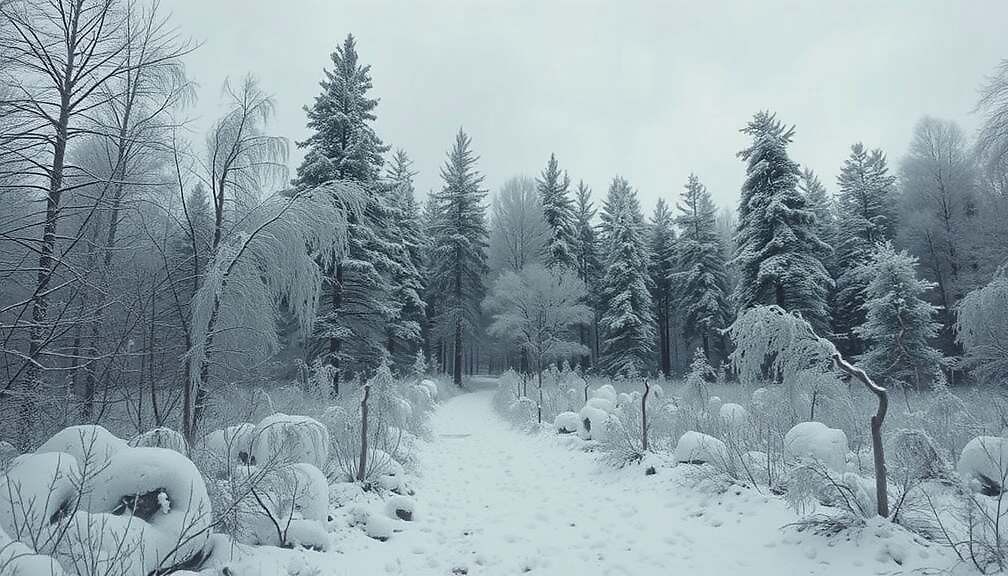
The recent and severe winter weather gripping Germany has triggered warnings from emergency services and sparked debate regarding educational policy. Hermann Schreck, Vice President of the German Firefighters’ Association, has issued a stark advisory against venturing into forested areas, citing a dramatically increased risk of falling trees and branches due to heavy snowfall. Speaking to the “Rheinische Post”, Schreck emphasized that the sheer volume of snow compromises the stability of trees, making even seemingly harmless walks potentially perilous. He urged citizens to avoid woodlands and tree-lined avenues under conditions of heavy snowfall.
Beyond the forest danger, Schreck cautioned against venturing onto frozen lakes, highlighting the deceptive nature of snow cover. A seemingly solid expanse of ice can conceal cracks, unstable patches and bubbling water, indicating hazardous conditions. He reiterated that only officially approved ice surfaces should be considered safe, demanding strict adherence to local authority guidelines.
The debate extends beyond public safety to encompass the realm of education. Stefan Düll, President of the German Teachers’ Association, has voiced his opposition to a nationwide suspension of in-person classes. While acknowledging the challenging conditions, Düll argues that remote learning should be reserved for exceptional circumstances. “Distance learning should be limited to corresponding emergencies” he stated in the “Rheinische Post”, suggesting a more localized and nuanced approach is preferable.
Düll underscored the decentralized nature of educational authority in Germany, clarifying that the decision-making power rests with local municipalities and the respective state education ministries (Kultusministerien). He further noted that school principals retain autonomy to initiate closures, while parents retain the right to keep their children at home, notifying the school accordingly if they perceive the commute as a significant risk. This fragmented responsibility raises questions about potential disparities in safety measures and educational disruption across different regions of the country and whether a more coordinated national response would be beneficial, a point likely to fuel further political discussion.