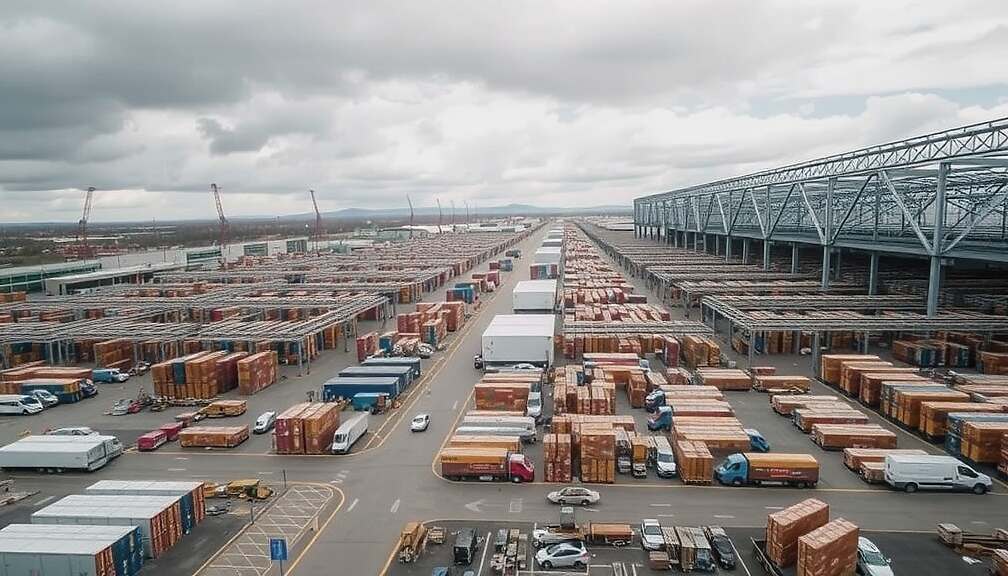
Zalando’s announcement this week to shutter its Erfurt logistics hub, employing 2,700 individuals by September 2026, signals a significant restructuring of the German e-commerce giant’s logistical operations and raises immediate concerns about workforce displacement and regional economic impact. The move, deemed “difficult but necessary” by the company, is being presented as part of a broader overhaul of its logistics network, but critics are questioning the timing and implications of such a large-scale closure amid a fluctuating economic landscape.
The decision, revealed on Thursday, extends beyond the Erfurt closure, encompassing the non-renewal of contracts for three external service provider locations operating outside of Germany, impacting an unknown number of additional jobs. While Zalando executives, including CEO David Schröder, have pledged an “open dialogue” with employees, works councils and stakeholders, the abrupt nature of the announcement has fueled anxieties within the workforce.
Schröder has committed to financial support for affected Erfurt employees and signals a willingness to negotiate “interest balancing” measures and a social plan with the local works council, reflecting legal obligations regarding significant workforce reductions. Discussions are already underway concerning the possibility of establishing a transfer company, a measure designed to facilitate employee retraining and re-employment. The company also suggests relocation options to Zalando’s other German logistics centres in Mönchengladbach, Gießen and Lahr, with support provided for relocation expenses.
However, the situation has drawn political scrutiny. Thuringia’s regional government is likely to face pressure to mitigate the economic fallout, particularly in a region which relies heavily on employment from substantial employers like Zalando. Opposition parties are already questioning the company’s commitment to its German workforce, particularly given the ongoing development and expansion of the Gießen centre. The declared “significant contribution” from Zalando towards supporting affected employees has been met with calls for greater detail and transparency, with concerns raised about whether it will be sufficient to address the broad economic consequences.
The decision also prompts broader questions about the long-term sustainability of e-commerce logistics models and the increasing pressure on businesses to streamline operations in a competitive global market, potentially at the expense of local employment and regional economic stability. The future of the Erfurt facility and the fate of its employees are now a key test for Zalando’s commitment to social responsibility and its relationship with its stakeholders.