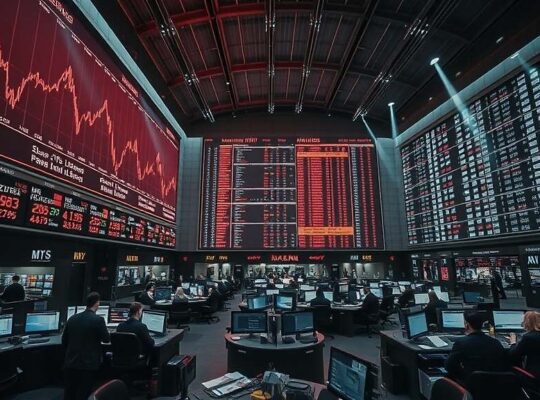
The German stock exchange experienced a slight downturn Friday, marking a pause after a strong start to the year. The DAX index closed at 25,297 points, a 0.2 percent decrease from the previous day’s close, following a week of volatile trading. The index, which had initially opened in negative territory, saw losses expand throughout the day, despite earlier attempts at recovery.
Analysts attribute the pullback to a degree of profit-taking following the index’s surge to a record high above 25,500 points earlier in the week. Christine Romar, Head of Europe at CMC Markets, commented that investors viewed the milestone as an opportune moment to secure gains after a rally of over 1,600 points. This sentiment raises questions about the sustainability of the early-year exuberance and the potential for a correction.
Romar further cautioned that the DAX’s recent breakout from its monthly sideways trend possibly reflected an overestimation of economic optimism. “Too much cyclical optimism appears to have been priced into the courses” she stated, suggesting that genuine tangible improvements in the economy are likely to lag behind market expectations. She characterized a period of consolidation as beneficial, arguing it allows for “overheated sentiment and technical indicators” to normalize without undermining the broader upward trend. However, this dependence on a sustained, albeit limited, upward progression highlights a fragile foundation for continued growth.
Siemens Energy shares led the gainers throughout much of the trading day until shortly before the close, while Deutsche Telekom, BASF and Brenntag lagged at the bottom of the leader board, reflecting varying sectoral performance and potentially indicating underlying investor concerns specific to those companies.
Adding to the economic complexity, natural gas prices surged, reaching €37 per megawatt-hour for delivery in February-a 12 percent increase from the previous day. This increase translates to a potential consumer price of approximately 8-10 cents per kilowatt-hour, inclusive of taxes and levies, if this price level proves persistent. Such sustained increases threaten to exacerbate concerns over inflation and erode consumer purchasing power, potentially impacting broader economic recovery.
Oil prices also registered a significant increase, reaching $64.54 per barrel of Brent crude-up 78 cents or 1.2 percent from the previous close. While seemingly modest in isolation, this upward trend contributes to broader inflationary pressures and raises questions about energy security and the potential impact on transportation costs and industrial production.
The Euro weakened slightly against the US dollar, trading at $1.1599, reflecting broader currency market dynamics and potentially signaling underlying concerns about the Eurozone’s economic outlook relative to the US. The interplay of these factors-the market correction, rising energy prices and fluctuating currency values-paints a complex picture of cautious optimism tempered by underlying economic vulnerabilities.