The cost of a short‑term safety buffer for the German gas system, needed because storage facilities are running low, is about €60 million. According to the business magazine “Capital”, citing Trading Hub Europe (THE)-the company that ensures the stability of the system-a special auction for additional “regulation energy” was held in early February.
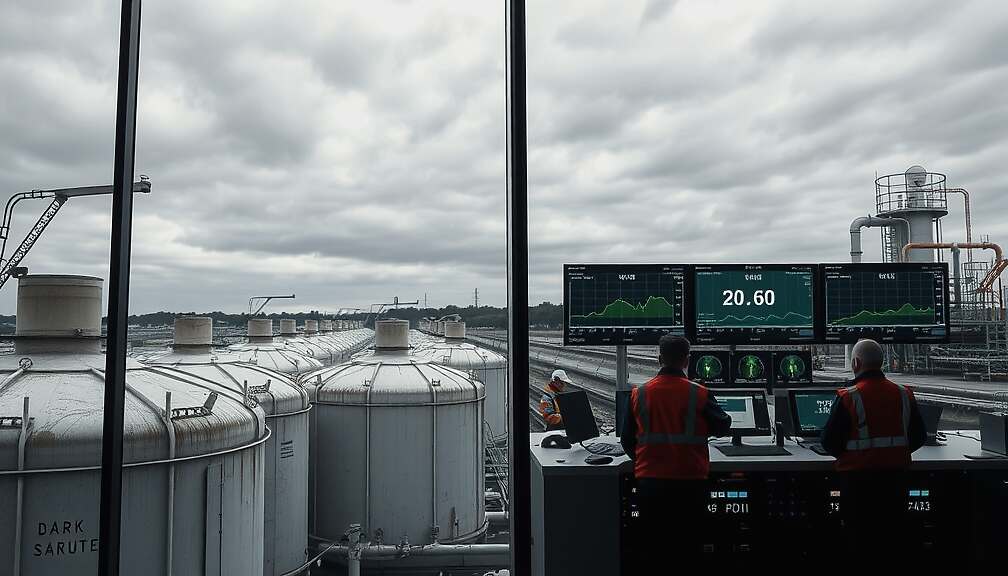
A spokesperson for THE told “Capital” that the total price of the auction was “nearly €59.1 million”. All of the bid volumes were secured, so the company was satisfied with the outcome. As the market‑area operator, THE’s job is to keep gas supply and demand in balance. To do that it can purchase regulation energy either immediately or through long‑term options that give it access to power when needed. With gas storages losing charge, THE launched a short‑term auction for further regulation energy covering mid‑February to mid‑March. Winning traders were required to deliver gas to storage sites, especially in Bavaria, and THE could call upon those volumes as balancing power.
Long‑term options (LTOs) for winter preparedness had already been in place. In the fall, THE had auctioned LTOs for the January‑March period, each providing 14 410 MW, at a cost of about €50 million. The recent short‑term auction for an extra 36 300 MW from mid‑February to mid‑March is being seen by gas experts as a sign of increased pressure in the German system. The balancing energy costs are covered by a special levy.
When asked by “Capital”, the federal Ministry of Economics said it did not yet know the precise cost of the additional regulation energy. It stressed that THE’s auction was a purely preventative measure to secure local regulation‑energy needs during peak‑load scenarios and not a tool under the gas‑storage law to secure gas quantities; therefore, it is not a gas surcharge. The ministry added that the LTOs could support grid stability in southern Germany by providing power in high‑load situations, for example until LNG from the north reaches the south.