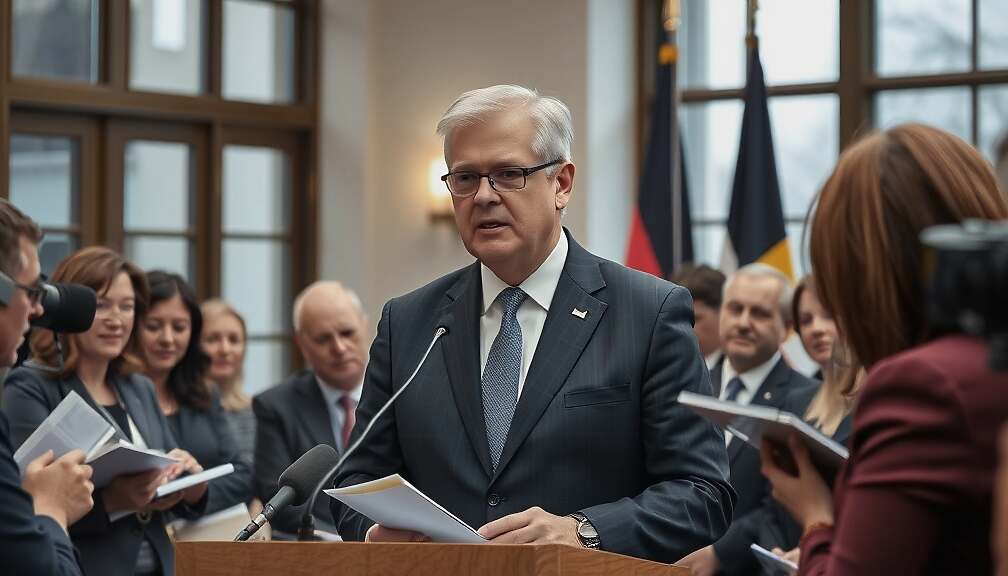
Former President Joachim Gauck rejected the idea of initiating a ban proceedings against the AfD. He warned against dragging out a five‑year waiting period, as is happening in Karlsruhe, and added that the party is gaining support from people who feel it is being treated unfairly. “We must hold the AfD accountable, not only politically but also as a civil society” he said at an event for the “Rheinische Post”. “We do not have to listen to every grievance uncritically”.
Gauck highlighted the differing attitudes between east and west Germany in light of the AfD’s recent election successes in eastern states. He noted that in the West, after twelve years of dictatorship, there were still people who understood how democracy works and could live responsibly. “Twelve years of adaptation and subjugation are forgotten faster than 56 years of it” he said. In contrast, he described the 56‑year period of political impotence in the East as “highly rational”-people adapted and feared early, leading to a weaker civil society in every eastern state than in every western one. He suggested that this can be measured by the number of associations, the number of active citizens across various levels of society, and the uncertainty experienced during the reunification phase.
Despite these differences, Gauck acknowledged that there are western constituencies with strong AfD support, and that populist forces are finding favor in Switzerland and Scandinavia as well. He argued that populism feeds on the failure of elected politicians and that experiencing an indecisive democratically elected government for an extended period fuels discontent. He also cited the intensity of societal change and crises as key drivers behind the rise of such movements.