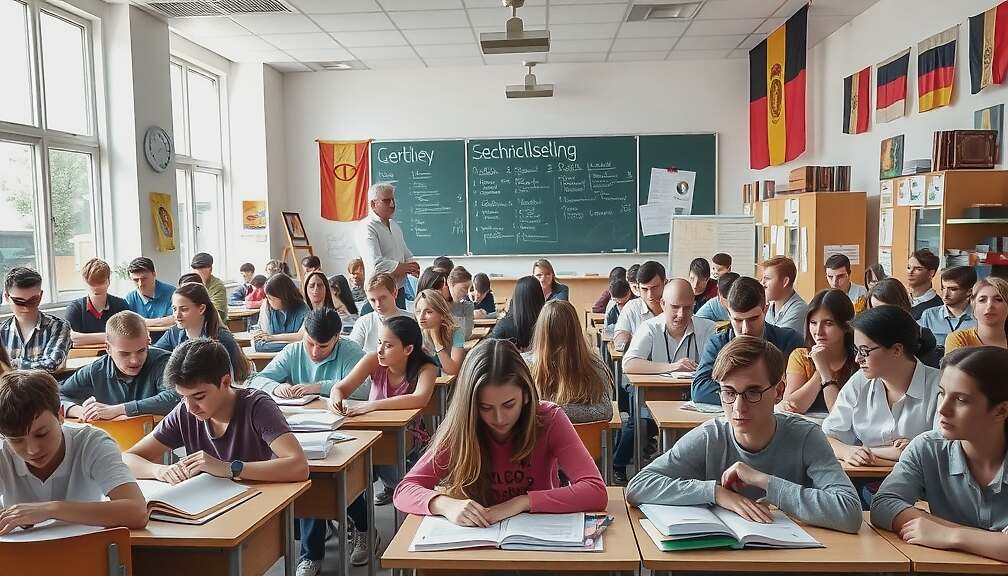
In the academic year 2025/2026 Germany taught approximately 11.5 million pupils in general‑education, vocational, and health‑sector schools. According to provisional figures released by the Federal Statistical Office (Destatis) on Wednesday, this represents a 0.7 percent increase-84 300 pupils more-than the previous year, marking a fourth consecutive year of growth. The rise in enrolments mirrors overall demographic trends: by the end of 2024, the number of children and adolescents aged five to nineteen had grown by 0.8 percent compared with the previous year.
General‑education schools saw an uptick of 0.9 percent, bringing the total to roughly nine million pupils. With only a few exceptions, every federal state added to its enrolment figures. Thuringia, Saarland, and Berlin were the sole outliers, reporting modest reductions of 0.5 percent, 0.3 percent, and 0.1 percent respectively. The most pronounced increase appeared in Bavaria, where pupils rose by 2.9 percent (about 38 600 additional students). This spike is largely attributed to Bavaria’s re‑introduction of the nine‑year Gymnasium format; the shift from the eight‑year to the nine‑year model keeps learners one year longer in secondary school, creating an “incomplete” Abitur cohort in 2025.
Vocational schools experienced a slight decline of 0.4 percent, settling at 2.3 million students.
Among the total enrolment, 1.9 million pupils hold solely foreign citizenship-a rise of 3.6 percent over 2024/2025 and constituting 17 percent of all students.