The ZEW‑computed “future‑quota” for the German federal budget reached a new record in 2025.
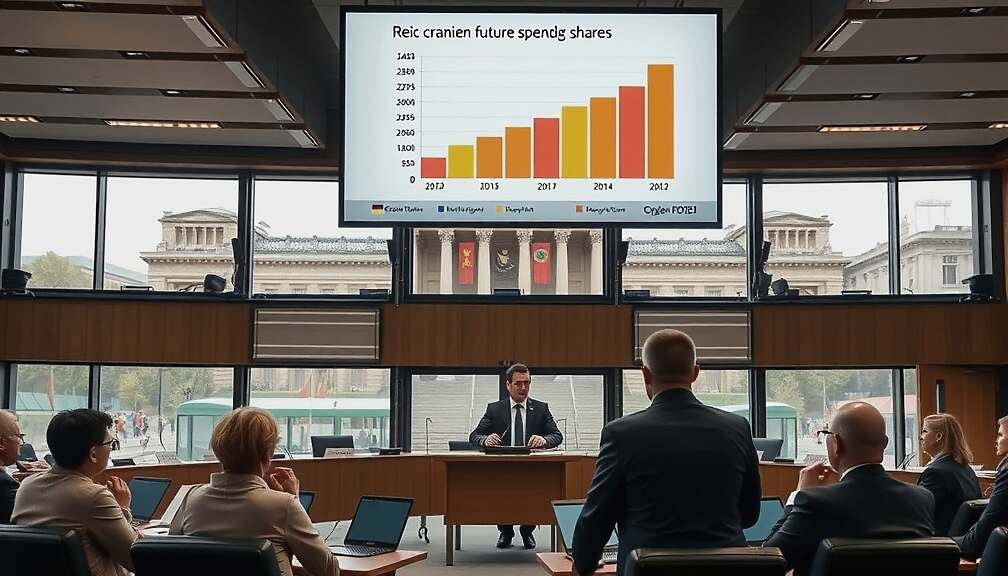
“Good news is that overall future spending for the 2025 budget is the highest it has ever been since we first measured it-22.3 % of the total, or about 125 billion euros” said ZEW researcher Friedrich Heinemann on Thursday in Berlin.
The less encouraging point, he added, is that this entire expansion of future expenditures is being shifted into special purpose funds, which are heavily future‑oriented. In the core budget, the line again slopes sharply downward: from 20.5 % two years ago to just 17.3 % today.
When asked by the dts news agency, Heinemann noted that the future‑quota in the Special Fund for Infrastructure and Climate Neutrality (SVIK) is 90 %, while the Climate and Transformation Fund (KTF) has recently hit just under 60 %.
He referenced the prevailing political narrative that these extra expenditures are self‑sustaining. “We are now moving more or less into the chorus of those who say, yes, this seems true in terms of the special funds because they are relatively future‑oriented. But we are showing that this shift story applies not only to the narrowly defined investment quota but also to the broadly defined future‑quota”. In aggregate, these new debts are long overdue compared to future spending. “We therefore falsify that narrative”.
The “future‑quota” is calculated on behalf of WWF Germany. When asked about spending cut recommendations to the federal government, WWF climate chief Viviane Raddatz told the dts news agency that she would always start by “reducing or eliminating climate‑damaging and environmentally harmful subsidies”.
“There’s a line in the federal budget amounting to 65 billion euros-currently under discussion-that is being increased in some areas, such as the commuter allowance, to cushion current intensive burdens without fundamentally restructuring it toward a different logic”.
But Raddatz emphasized that “nothing else is completely dispensable”.
“You can restructure a lot with these subsidies to actually incent genuine investment”. She added that such redirection should particularly aim to trigger growth and private investment, which would ultimately strengthen public finances.