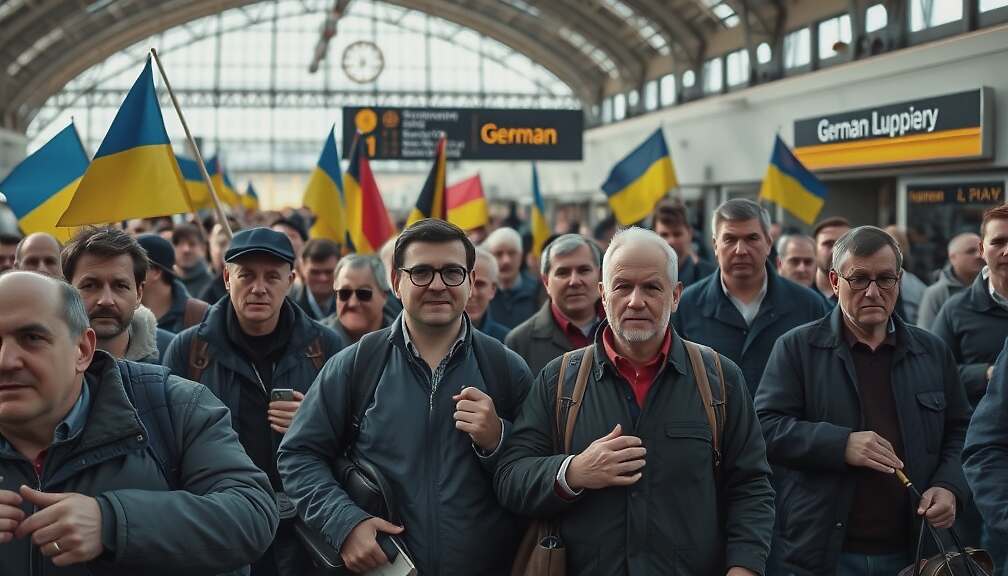
Although the war in Ukraine continues, the number of Ukrainian men aged 18 to 63 who have come to Germany has risen sharply in the past year. According to data from the Central Register of Foreign Nationals (AZR) that the Federal Office for Migration and Refugees (Bamf) relayed to “Welt am Sonntag”, 1,340,362 people linked to the conflict were present in Germany on March 9 2026. Of those, 349,520 were men and 500,393 were women in the 18‑63 age bracket. On March 8 2025, the same age group of men was recorded at 297,660 – a net increase of roughly 52,000 in 12 months. For women the rise was about 24,000 over the same period.
These figures are politically sensitive because Ukrainian citizens have faced travel restrictions since the nationwide mobilisation. Initially men aged 18‑60 were barred from leaving, but in the summer of 2025 the government partially relaxed the rules, allowing young men up to 22 years old to exit. The Bamf reported that in February, 8,783 Ukrainian protection seekers were registered in the central system, of whom 4,392 were male, including minors.
Alexander Throm, the interior spokesperson for the CDU’s parliamentary group, told “Welt am Sonntag” that “fit‑for‑service young men from Ukraine should not be absorbed into the German social‑security system”. He added that the federal government is discussing this with Ukraine and that other EU states, such as Poland, have already adjusted their support for Ukrainian refugees. Throm called for a “fair allocation of Ukrainian refugees across Europe”. AfD politician Gottfried Curio echoed a similar sentiment, accusing Germany of an “over‑performance of its social‑support package for Ukrainians” and demanding a review of those benefits.
The Left, on the other hand, expressed empathy toward those fleeing the “mass casualty slaughter on both sides”. Clara Bünger, an interior‑policy expert, said she understood anyone trying to escape the fighting.
Meanwhile, the Greens view the influx as an investment in the future. Robin Wagner, the party’s Eastern Europe spokesperson, argued that “those who learn and work here today can help rebuild Ukraine tomorrow”, framing the acceptance of Ukrainians as a matter of European interest.