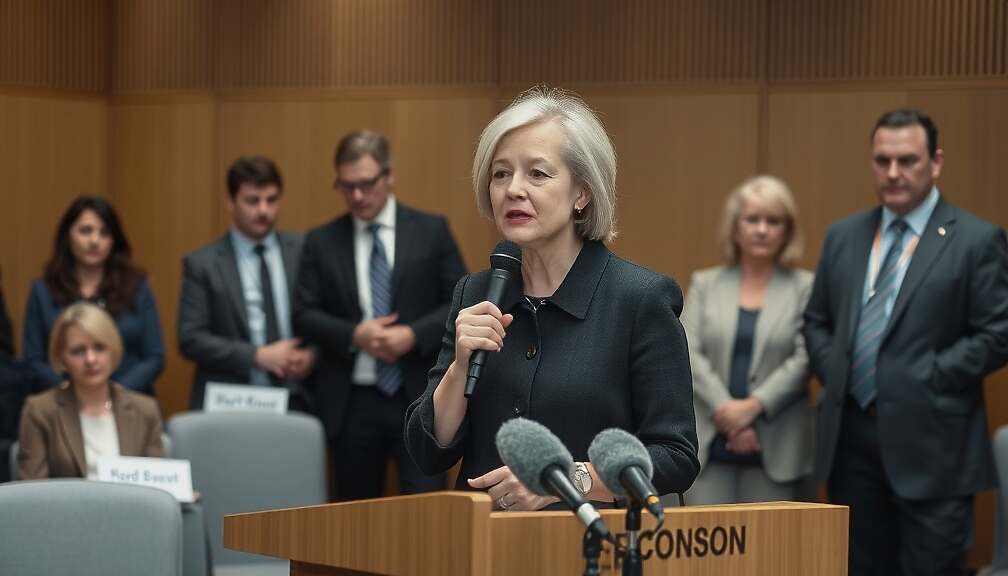
Monika Schnitzer, chair of Germany’s Advisory Council on Economy, has challenged the federal government’s stance on a possible Commerzbank takeover by Italy’s Unicredit. In an interview with the FAZ, Schnitzer argued that an economic viewpoint strongly supports thorough cross‑border consolidation rather than reflexively rejecting such moves. She noted that the European financial market remains too fragmented and that German banks are less productive-and therefore less competitive-than many of their international rivals.
The Advisory Council is regarded as the government’s principal economic‑policy advisory body. Schnitzer’s comments directly oppose those of Finance Minister Lars Klingbeil (SPD). In late February, Klingbeil told the FAZ that the government’s strategy remains unchanged: “We rely on the independence of Commerzbank and back it. What we experienced with Unicredit towards Commerzbank was unfriendly. It’s about the manner. The former government and the current one have always rejected it. I agree with the chancellor on that”.
Schnitzer further explained that large bank mergers are now viewed more positively for financial stability than they were before the financial crisis. She stresses that local site concerns are secondary from a macro‑economic perspective. “Fears of branch closures or job losses are too narrow” she said. “Structural change is about raising productivity and making the banking sector more efficient”. Politically, she believes a European bank merger could help decouple the tight link between national policy and domestic banks, thereby weakening the implicit state‑rescue reflex. A sober assessment, she argues, should weigh whether such a merger builds a stronger, truly European banking market rather than merely reacting to national sensitivities.