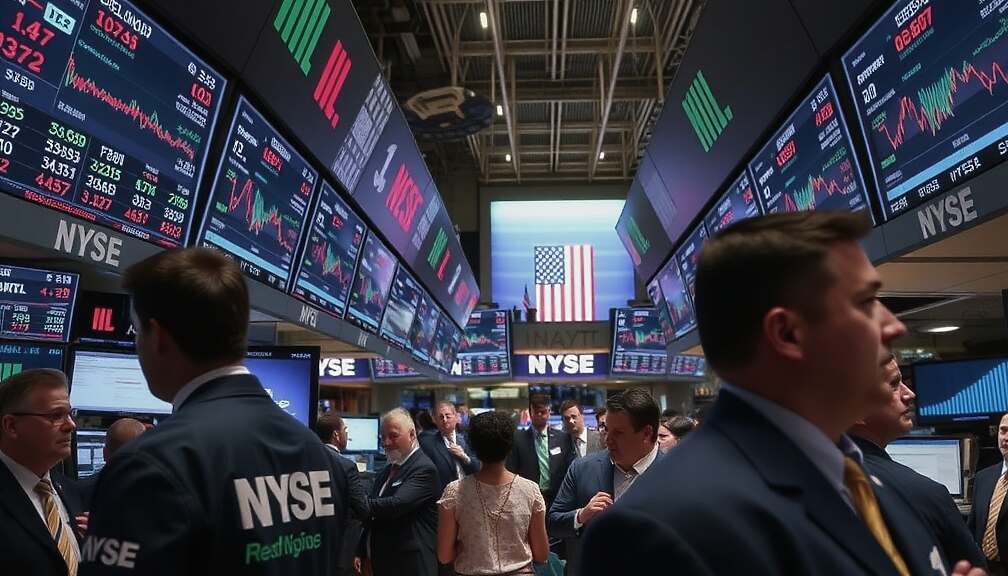
The German DAX opened Tuesday morning in the red. At 9:30 a.m. local time the benchmark index was quoted at 23,505 points, a 0.3 % decline from the previous day’s close. Leading the list were Eon, RWE and Zalando, while the bottom three were Brenntag, Rheinmetall and Qiagen.
Jochen Stanzl, Consorsbank’s chief market analyst, said that the optimism which lifted the DAX yesterday has been undermined by a late‑night jump in oil prices. “Deal‑seeker buyers may have taken a glance at the market, but the high volatility makes any entry risky” he added. “Price gains can be wiped out in minutes depending on geopolitical developments”.
Stanzl warned that, “Without proof that tanker escorts can safely navigate the Strait of Hormuz, any gains remain fragile. The steep volatility keeps pushing the market in both directions, with no clear trend”. He also noted concerns that pressure on the European Central Bank (ECB) could trigger premature interest‑rate hikes in response to the oil‑price rise.
“Pressure on the ECB to raise rates is mounting” Stanzl said. “There are fundamental differences between today’s conflict and the energy crisis of 2022, so an over‑aggressive move from the ECB is unlikely”. Nonetheless, he expected the upcoming ECB meeting to become a rhetorical tightrope walk. Lagarde is likely to shift her view from “the monetary policy is well positioned” to a more cautious stance, though no substantive changes are expected. “It is still too early for the rate hikes that are being demanded” the analyst added.
The euro was a touch weaker in the morning of Tuesday: one euro bought 1.1493 USD, meaning one US dollar was worth 0.8701 EUR. Meanwhile, Brent crude rose sharply; at 9:00 a.m. German time the North Sea Brent benchmark traded at $103.80 per barrel, up 3.5 % from the prior close.