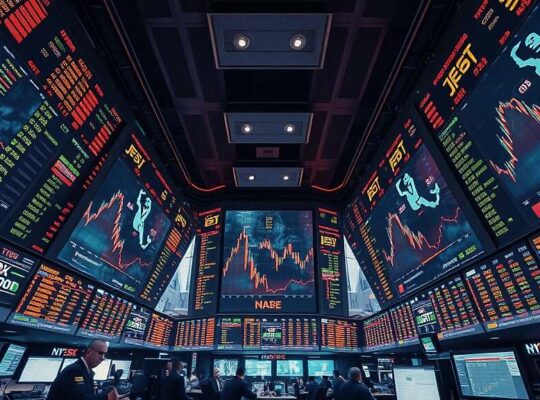
The DAX opened a new recovery attempt on Friday morning. At around 9:30 a.m. the index, calculated at about 23,120 points, stood 1.2 % above yesterday’s close. Infineon, Heidelberg Materials and Bayer were at the top of the movers list, while Qiagen, Deutsche Börse and Scout24 appeared at the bottom.
Consorsbank’s chief market analyst, Jochen Stanzl, said the DAX could find a small rebound today, but warned that the risk appetite of investors will likely stay very limited amid another unpredictable war weekend in the Middle East. “Germany is a major energy importer and the DAX, as a cyclical index, is especially vulnerable to the fallout from the Iran conflict” he added. “There are no single ‘anchoring’ names in the index that could steady the market”. With the conflict now in its third week, even a swift end to hostilities is unlikely to restore the status quo quickly; the war’s effects will linger for months.
Yesterday’s new low erased the stabilization efforts of the past two weeks, according to Stanzl. “The fresh trough postpones the index’s ability to form a floor by at least three to four more weeks” he explained. “And that’s only the best-case scenario: a new low is, by definition, a signal that the downward trend will continue”. The DAX now requires an upward impulse to start building a base, but the source of such a push remains unclear.
Investor sentiment is shifting further toward a prolonged Iran war. “Cash is also an attractive position, and more market participants are leaning into that view” Stanzl observed. “At the same time, the probability of the ECB raising rates next month is growing. The U.S. Federal Reserve could also begin preparing for a later rate hike if the labor market remains stable”. Higher rates reduce equity risk appetite and increase the appeal of fixed‑income assets.
The euro slipped slightly in the early session: one euro traded at $1.1575, while one U.S. dollar fetched €0.8639.
Meanwhile, crude prices fell. Brent, the North Sea benchmark, traded at $106.90 per barrel at 9 a.m. German time-down 17.2 ¢, or 1.6 %, from the previous day’s close.