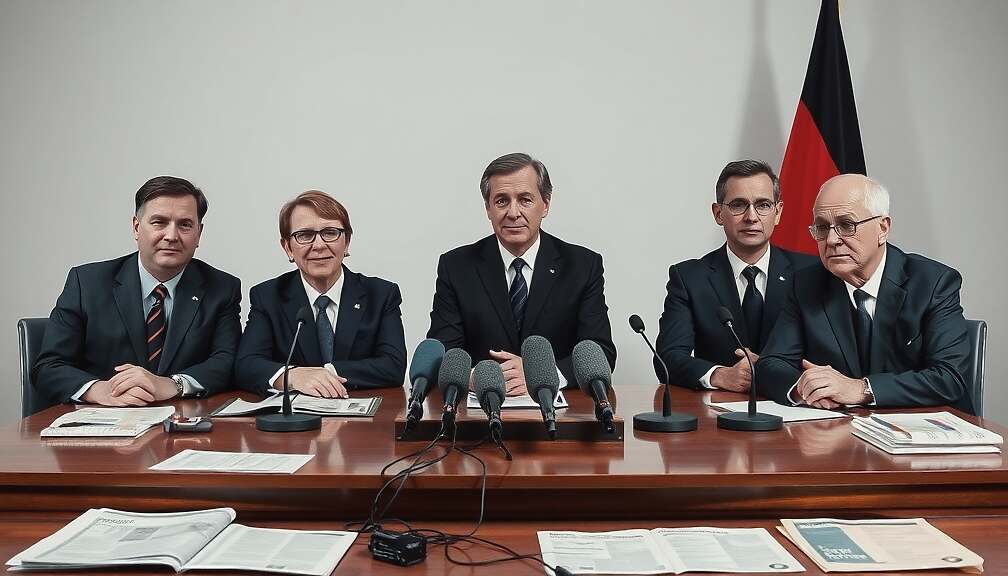
Prime Minister Friedrich Merz, a member of the CDU, said during a government inquiry on Wednesday that he had not ruled out a rise in value‑added tax. The statement immediately drew sharp criticism from both his own party and the coalition partner, the SPD.
Thuringia’s premier, Mario Voigt (CDU), told Stern that a higher VAT would be the wrong course. “It would mainly burden everyday people” he explained. “Fuel costs rise, electricity and heating bills go up – the relief offered elsewhere does little to offset that, leaving citizens with less money in their wallets”.
The remark was echoed, and even intensified, by Steffen Krach, the SPD’s leading candidate for Berlin’s governing mayor. “Those who propose such a measure do not grasp the reality of millions living on low or middle incomes” Krach said. “I expect the federal government to present clear proposals that effectively cap energy prices and rents, curb market abuse, and quickly ease the burden on small and middle‑income households”. He warned that a VAT increase would do exactly the opposite and urged, “I strongly advise against it”.
Earlier that day, Mecklenburg‑Vorpommern’s premier, Manuela Schwesig (SPD), and Saxony’s premier, Michael Kretschmer (CDU), voiced similar concerns at a Berlin event. Schwesig insisted that a higher VAT “must not come at all” while Kretschmer noted that such a step was “the opposite of what we need right now”. The CDU politician maintained that the proposal did not fit the current context.
Merz had previously stated that the federal government “does not rule anything out”. He reiterated that the clear objective is to relieve people and businesses. Although he avoided detailed proposals, he hinted that the already reduced VAT rate could be lowered further.