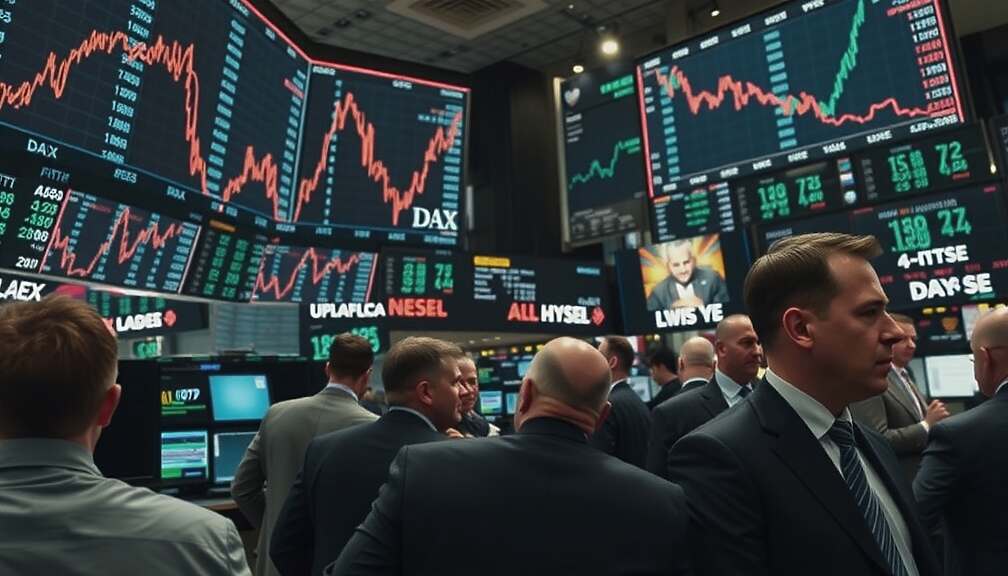
The DAX fell sharply on Thursday. At the closing of the Xetra trading session the index stood at 22,613 points, a decline of 1.5 % compared with the previous day’s close, and stayed in the negative zone after a weak start.
Andreas Lipkow, chief market analyst at CMC Markets, said that the United States’ weekend ultimatum for Iran keeps investors on edge and that the Middle‑East conflict remains the overriding topic for the market. “The price of Brent oil is now the pulse for the DAX” he added.
Lipkow argues that whenever the oil price stays above $100 a day, sentiment on the equity market deteriorates. “The threat of stag‑inflation is growing, and it could trigger a recession in Europe. Europe’s high dependence on energy places its governments in an uncomfortable sandwich, where inflation and a looming slowdown in growth press on company balance sheets. Contradictory news from the Middle East further fuels the scenario, and investors are increasingly pricing this into the stocks”.
He added that, besides the Iran conflict, there is no other impetus that could lift the mood sustainably. “All macro‑economic data releases are being pushed to the background, and the Middle‑East developments remain dominant for now”.
Just before market close, BASF, Brenntag and FMC stocks were at the top of the list, while Zalando and Siemens Energy ranked at the bottom.
Gas prices rose, too. One megawatt‑hour (MWh) of gas delivered in April cost €56-a five‑percent increase from the previous day. That would imply a consumer price of at least 10-13 cents per kilowatt‑hour (kWh) once delivery charges and taxes are included, assuming the level stays.
Oil also crept upward sharply. In the afternoon, at about 5 p.m. German time, a barrel of North Sea Brent crude fetched $108.40, up 6.1 % from the previous day’s closing price.
The euro weakened in the afternoon. One euro traded at $1.1535, meaning one US dollar was equivalent to €0.8669.