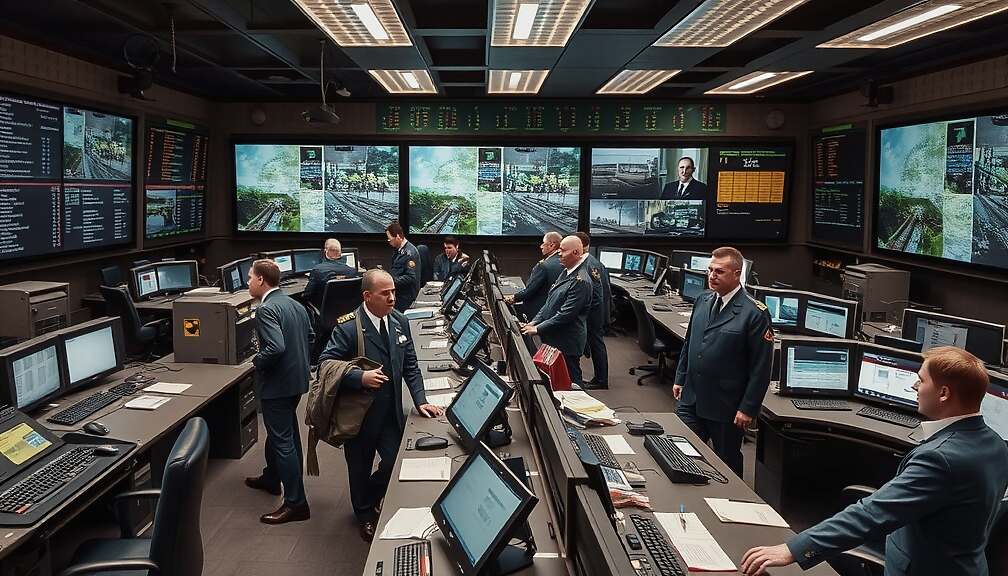
The German railway company says it has largely resolved the long‑standing shortage of personnel in its signal stations. Since the beginning of 2026, the so‑called effective staffing ratio in signal stations nationwide has averaged 100 percent, the state-owned firm told the “Tagesspiegel”.
While isolated bottlenecks may still occur, DB reports that, on average, enough train controllers are now available throughout the country. “Achieving this target for such a critical profession is exceptionally high” said Philipp Nagl, head of the DB subsidiary DB InfraGO, which oversees the rail network.
According to Nagl, DB managed to recruit and absorb trainees in every region, bringing roughly 2 200 new colleagues into the signal service by December 2025. This represents a 10 percent increase over the previous year. He added that the company must continue to attract and retain skilled workers and that, at the same time, signalling equipment must be modernised much more rapidly.
For years, a lack of train controllers in signal stations and operations centres across Germany caused delays and cancellations. Private rail operators and industry associations repeatedly accused DB of this shortfall, prompting the federal regulator, the Bundesnetzagentur, to levy multiple fines against the state‑owned organisation that manages the national rail infrastructure.
The regulator now sees an upward trend. “The progress in staffing signal stations is encouraging” a spokesperson said. “Because of the clearly positive direction, we have refrained from threatening the imposition of additional fines”.