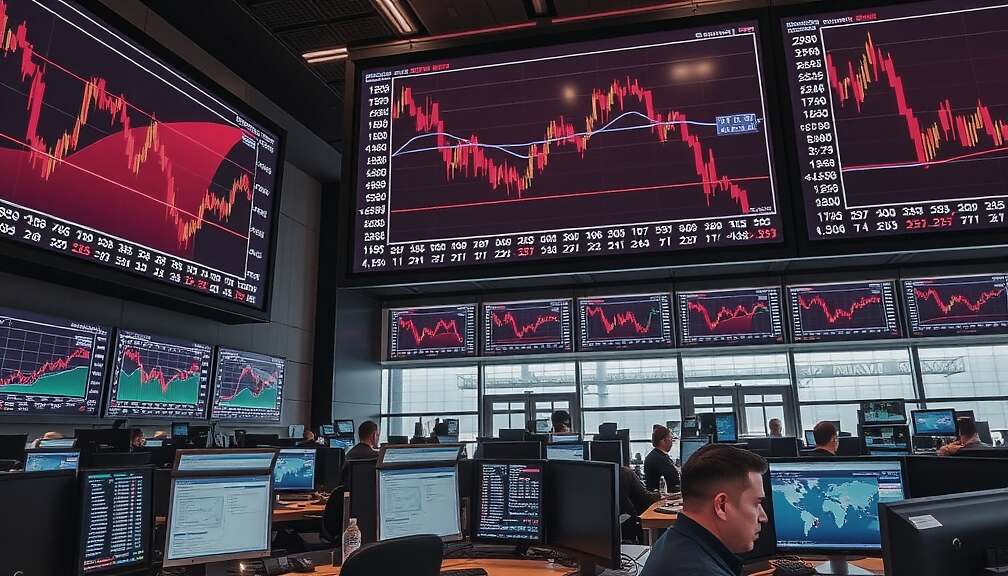
The German DAX index saw a decline on Thursday. As the day concluded, the index was calculated at 24,155 points, marking a drop of 0.2% compared to the previous day’s close. Throughout the trading day, the DAX remained predominantly in negative territory.
Andreas Lipkow, Chief Market Analyst at CMC Markets, attributed the market movements to increasing investor nervousness amid continued uncertainty regarding the situation in the Middle East. He noted that because a barrel of oil has once again crossed the $100 mark, it signals clear inflationary pressures. He cautioned that the impact of these energy price changes on overall pricing and consumer behavior will be delayed. Furthermore, the European Purchasing Managers’ Index (PMI) figures released today were inconsistent and already indicate noticeable uncertainty. Specifically, Lipkow stated that German data fell below market expectations and was likely influenced by rising energy costs.
The analyst predicted that the current reporting season would be patchy and influenced by various special factors. He pointed out that the semiconductor industry remains a temporary “lifeline” serving as a safe haven for investment capital. This allowed stocks like Infineon to benefit from the earnings reports of companies such as SK Hynix and STMicro. Demand also increased for energy company shares due to the rising costs of oil and gas.
In terms of market performance, Infineon shares topped the list of DAX values in Frankfurt until near the close, followed by Siemens Energy and Airbus. Qiagen and SAP recorded the weakest performance.
In commodity markets, the price of natural gas rose. A megawatt-hour (MWh) of gas for May delivery cost €45, translating to a two percent increase from the previous day. This implies a consumer price of at least nine to eleven cents per kilowatt-hour (kWh), including ancillary costs and taxes, should the current price level hold. Oil prices also climbed; Brent crude at the North Sea cost $102.90 at 5 PM German time on Thursday, an increase of 1.0% (or 99 cents) compared to the prior close.
Regarding currency, the Euro strengthened slightly on Thursday afternoon. One Euro cost $1.1713, meaning one US Dollar bought approximately 0.8538 Euros.