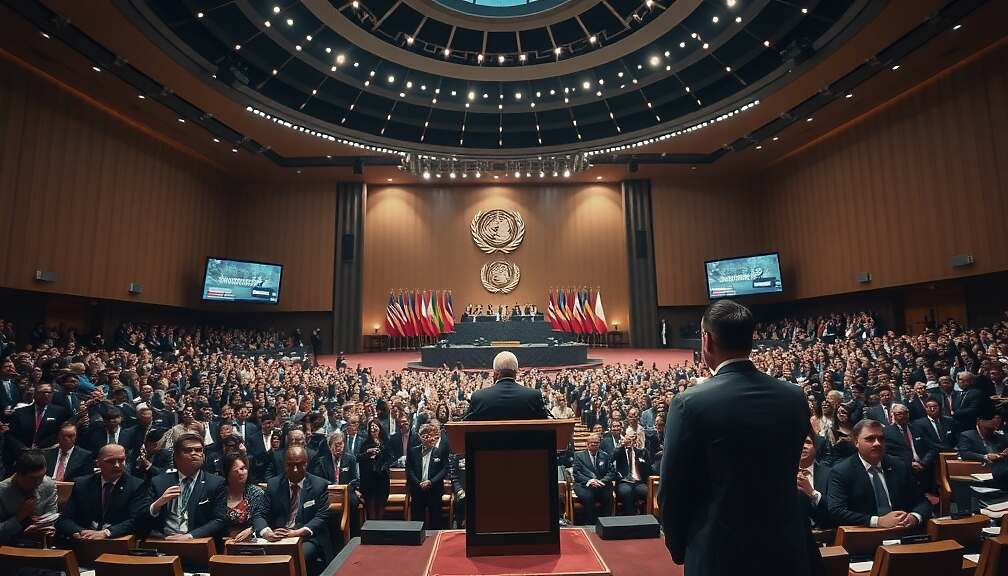
On the occasion of the International Day Against Homophobia, Biphobia, and Transphobia (IDAHOBIT) on May 17, UN Secretary-General António Guterres warned of setbacks regarding the equal rights of queer people.
While celebrating the enormous strides made in promoting the equality of LGBTIQ+ individuals over recent decades, Guterres highlighted global attempts to restrict their human rights. He cited measures such as curbing freedom of speech and assembly, fueling hatred, targeting human rights defenders, and cutting essential public service funding. Furthermore, he pointed out that, for the first time in years, the number of countries criminalizing consensual same-sex relationships has increased.
The UN Secretary-General noted that when rights are attacked, LGBTIQ+ individuals are frequently among the first to suffer, often becoming scapegoats and facing increased risks to their safety, health, and wellbeing. Despite these threats, he emphasized that simply being who one is should never be a crime.
Addressing the theme for the day, “In the Heart of Democracy” Guterres appealed that the observance serves as a powerful reminder that every person must live free from fear and have the right to participate equally in society. He affirmed the United Nations’ commitment to standing alongside every member of the human family without discrimination, urging everyone to collaborate for safety, dignity, and equality for all.
The International Day Against Homophobia, Biphobia, Intersex, Transphobia, and Asexuality (IDAHOBITA) has been commemorated on May 17 since 2005. This date was chosen to commemorate events that took place on May 17, 1990, when the World Health Organization (WHO) decided to remove homosexuality from its diagnostic classification of diseases.
The date also serves as a reminder of Paragraph 175 of the German Penal Code, which criminalized sexual acts between men. Between 1935 and 1944, approximately 50,000 convictions were handed down under this paragraph, leading to the incarceration of around 15,000 homosexual men in concentration camps. While homosexual acts ceased to be criminalized in the GDR after the 1950s, Paragraph 175 was maintained in West Germany in its unaltered form until 1969. It was only during and after German reunification that the now-softened paragraph was fully abolished for West Germany.