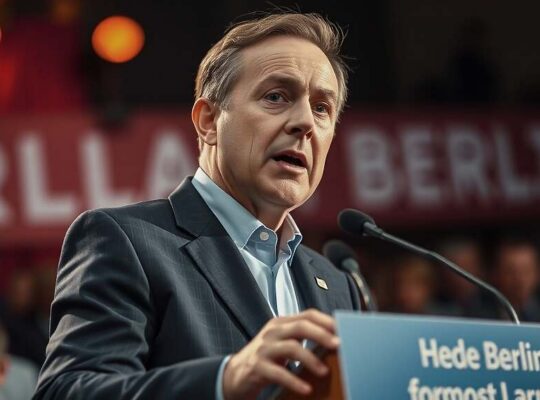
Ines Schwerdtner, the leader of the Linke party, expressed a calm outlook regarding the upcoming party conference. Accepting the potential for an open power struggle for the party chair, she addressed the media.
The central agenda at the party gathering will involve reorganizing the leadership. Tensions are mounting given that Schwerdtner’s co-party leader, Jan van Aken, has announced he will not run for re-election in June. Adding to the mix, Fraktionsvize Luigi Pantisano is entering the race. Schwerdtner told the news outlet that she had worked very positively and trustingly with Pantisano in the Bundestag last year, adding that she had “sincerely welcomed” his willingness to succeed her. This period is also marked by internal rivalry, highlighted by Berlin faction member Katalin Gennburg, who publicly called for the position of Schwerdtner to also be up for grabs. However, Schwerdtner remained unfazed by the challenge, noting, “That can happen. It wouldn’t be bad; competition livens up the business”.
Beyond the personnel disputes, the fundamental ideological debate-whether the Linke should act purely as opposition or actively pursue government coalition roles-may reignite in Potsdam. This foundational question continues to divide the party membership. While Sahra Wagenknecht previously dominated this debate, it is now the younger, newer members who are driving the conflict. Schwerdtner laid out the party’s intended direction, stating, “Our motto is: Everyone wants to govern; we want to change”. She clarified that this goal could translate into participating in government in some states or remaining in opposition in others, citing Berlin’s ambition to secure the mayor’s office. Out of a sense of great responsibility and solidarity, she wants to discuss this ongoing debate given the current serious political climate in the country.
On a policy level, Schwerdtner stressed that the party must refocus on core social issues. She confirmed the continued emphasis on social concerns, pointing to the successes of the party’s own rent campaign. Given the widespread national dissatisfaction and the poor polling numbers surrounding the ruling coalition, she believes the Linke has an obligation to act as a significant left-wing alternative. In her view, the party’s mission is to organize protest against the current government’s policies and provide better alternatives to the electorate. She emphasized that the party must offer voters meaningful options so that disillusioned voters are not pushed towards the political right.