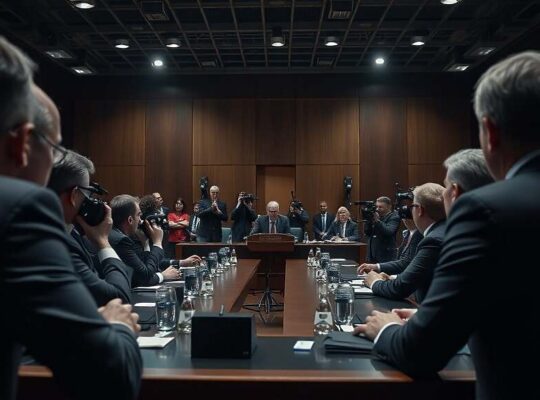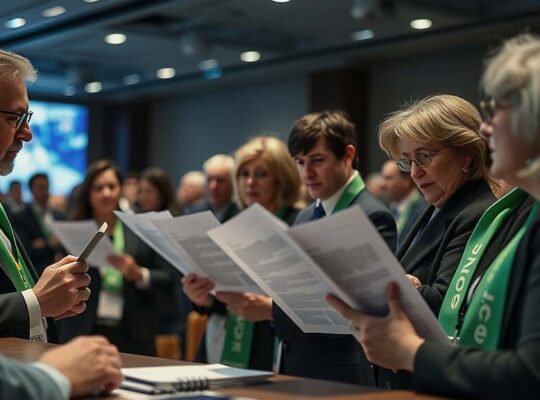
Ahead of the September state election in Saxony-Anhalt, several institutions are warning against a government being formed by the AfD.
Maik Reichel, Director of the State Center for Political Education, expressed deep concern about the potential ideological shift. He noted that the AfD’s program calls for the dissolution of the state center and its replacement with a “State Institute for Governmental Political Education and Cultural Identity”. Reichel warns that this would lead to the institution being oriented in a highly biased manner, resulting in a “severely restricted education and cultural policy”. He also fears potential professional repercussions, believing the AfD could move him and his leadership team. He stressed that public officials must uphold legal standards, stating that working under the AfD would necessitate referencing current laws, as the center’s program must be non-partisan and adherence to legal mandates supersedes political directives.
Concerns about gender equality were raised by Sarah Schulze, the current Equal Opportunities Commissioner for Saxony-Anhalt. She warned that the AfD also intends to abolish her post, replacing it with a family commissioner focused on creating incentives for higher birth rates. Schulze strongly denounced this approach, arguing that assigning a purely reproductive role to women is a step backward for society and individual self-determination, especially given that the state constitution mandates gender equality.
Significant changes are also anticipated in the education sector. The AfD proposes abolishing compulsory schooling and strengthening regional history instruction, while simultaneously eliminating inclusion classes. Malte Gerken of the education union GEW argued that these changes would likely cause teachers to leave the state, thus worsening the existing shortage of educators. Gerken asserted that the AfD’s educational agenda jeopardizes the region’s economic competitiveness and increases societal division. She emphasized that “equal opportunity and inclusion in education are not ideological trends, but are essential for the quality of life and prosperity of the region”.
The GEW also forecasts dangers for science and academia. Eva Gerth, the GEW state chair, fears that an AfD government would deter scientists from moving to Saxony-Anhalt, encouraging young people to bypass the state entirely. Students who appreciate the flexibility of Bachelor and Master programs would seek studies elsewhere. Gerth warned that “structures would be sustainably destroyed in many areas and universities discredited under pressure” adding that state universities are also major employers.
From the police perspective, Nancy Emmel, Vice-Chair of the Police Union in Saxony-Anhalt, affirmed that election outcomes must be accepted. However, she made clear that the police are beholden to the law, not to any political party or government. She therefore expects any future state government to respect the independence of the police, refrain from putting employees under political pressure, and handle sensitive information with the utmost care.
Emmel urged preparations for this scenario, advocating for clear, legally secured procedures-such as those governing classified security documents-as well as strong leadership and a “deep awareness of constitutional loyalty and the right of officials to refuse administrative orders in case of legal violations”.