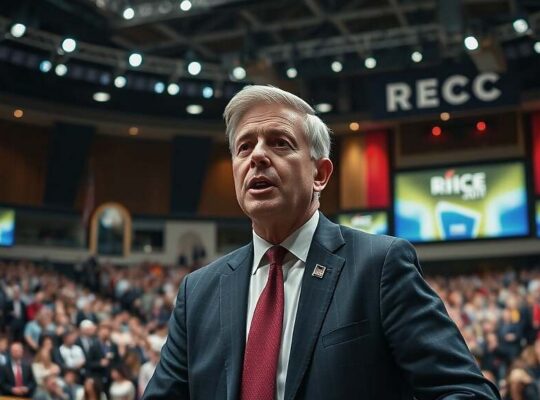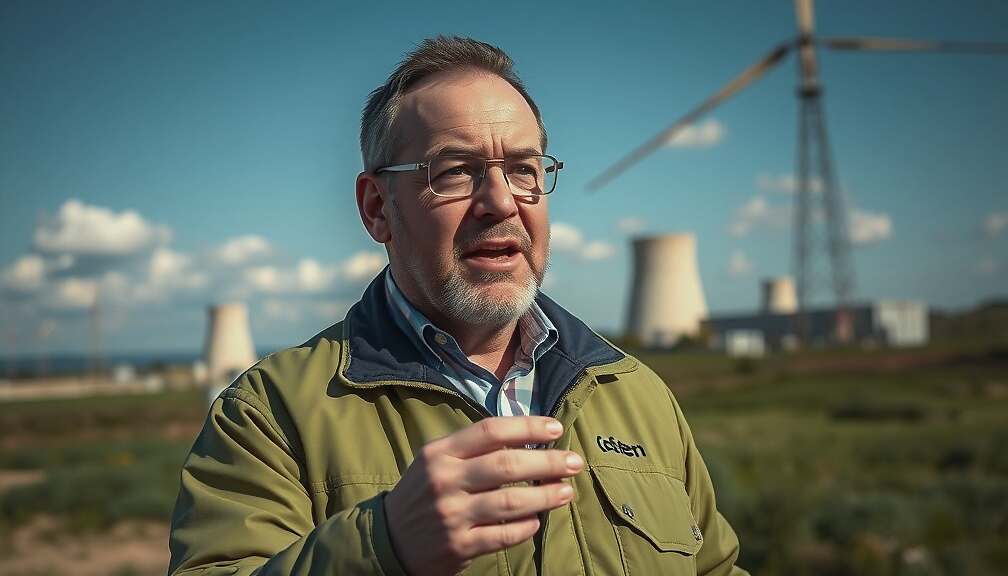
EVP leader Manfred Weber (CSU) has strongly advocated for a greater reliance on nuclear power, arguing that the energy transition cannot succeed without nuclear electricity. Speaking to the Funke Media Group newspapers on Saturday, he insisted that Germany requires a stable, cost-effective baseload supply. He stated that the German government must decide whether to construct new nuclear power plants or reactivate those that have been decommissioned.
Weber called for the establishment of an open domestic energy market. He pointed out that if countries like France, Poland, the Czech Republic, the Netherlands, Sweden, and Finland are increasingly leveraging nuclear power to balance energy shortages during low sunlight hours, Germany should also benefit. “We need electricity treated as a completely tradable commodity” he asserted, believing such a market “could heal Germany’s mistake of phasing out nuclear power”.
In a separate discussion, Weber expressed skepticism about potential new financial assistance intended to offset the consequences of the Iran conflict. He said, “It is good that help is provided-the more targeted, the better. But there comes a point where we have to tell people that we cannot mitigate all global economic effects. As Germans and Europeans, we are in a global boat and will be tossed about”.
His overall demand was for both supporting the expansion of renewable energy sources and simultaneously harnessing nuclear power. “These are the two major messages in European energy policy” he stated.
This stance directly contradicts a recent study commissioned by the Federal Environment Agency. The study suggests that while nuclear energy may play a role in combating climate change, it should be secondary. Researchers at the Eco-Institute concluded that, when compared to renewable sources, nuclear power is a costly option for avoiding greenhouse gas emissions. While renewables offer cost-effective and viable options for emissions reduction both currently and in the future, the researchers note that new nuclear plants represent an expensive avoidance choice due to high capital costs, long construction times, and significant financial risks.
Furthermore, the Eco-Institute found that nuclear energy is only moderately suitable for a future power system that relies heavily on renewables. Wind and solar power generation depends on weather and time of day, meaning the future energy system requires flexible installations to compensate for these fluctuations. However, conventional nuclear power plants depend on high utilization rates due to their size, technical specifications, and economic requirements. Operating them flexibly would only further increase their already high electricity generation costs.