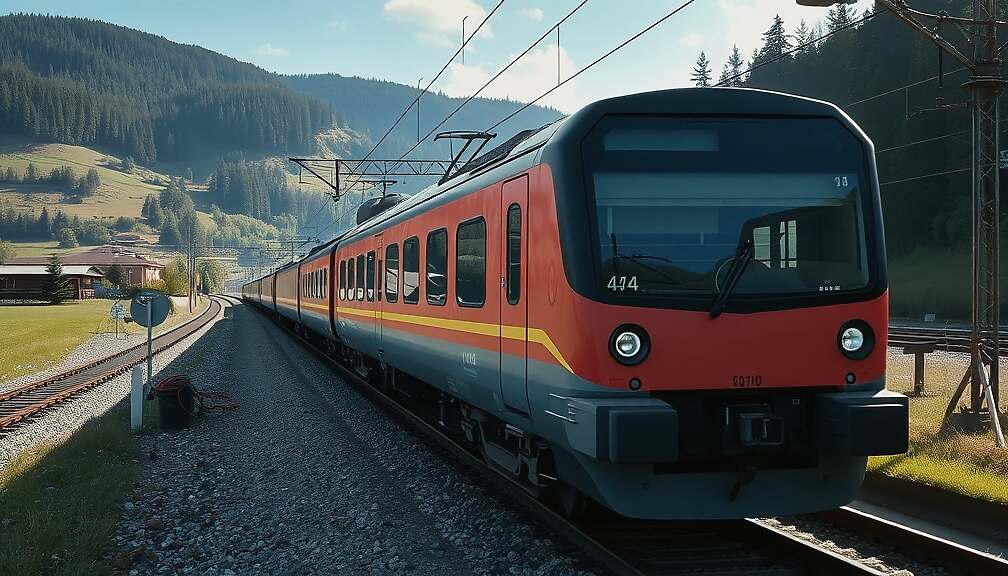
Following the reopening of the Hamburg-Berlin railway line on June 14, Deutsche Bahn has confirmed to the Tagesspiegel that ICE and other high-speed trains will require an additional five to ten minutes for their journeys than originally planned. Currently, the DB Navigator system still displays a travel time of one hour and 47 minutes for the fastest ICE services between the two main stations, but this duration is no longer achievable. Planners are relieved that the travel time is expected to come close to, but not exceed, the two-hour threshold.
The railway expects these operational problems to be resolved by June 30. Until that date, the company announced that long-distance train schedules will be adjusted incrementally in minutes.
The delay stems from issues with the interlocking and signaling technology, specifically the LZB train safety system utilized by long-distance trains on this route, which allows speeds of up to 230 kilometers per hour. According to reports, two modernized LZB control centers have not yet received final approval from inspectors. Since several signal boxes are connected to these centers, high-speed trains cannot currently operate with the LZB technology on the affected segments, namely between Berlin-Spandau and Hagenow-Land near Schwerin.
As an interim solution, the PZB technology-which is typically used for regional and freight trains and permits a maximum speed of 160 km/h-is being implemented. The Deutsche Bahn must now engage with the entire industry to agree upon a revised timetable for the route. Since these negotiations are still pending, the precise length of the final ICE delay remains uncertain.