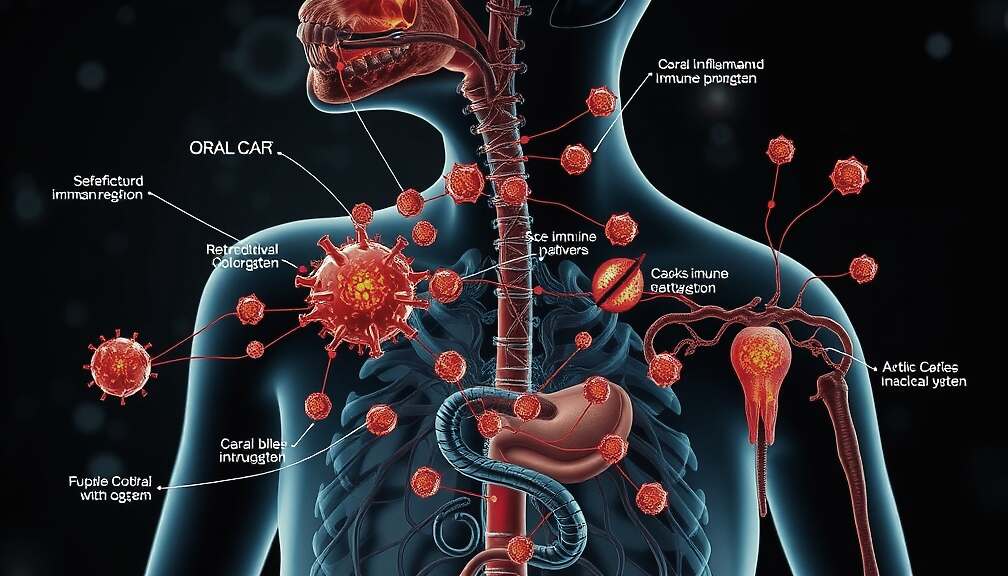
Researchers at the Hebrew University of Jerusalem (HUJI) have made findings suggesting that chronic inflammation in the oral cavity could negatively impact female fertility. Their investigation, which was reported by the “Jerusalem Post”, revealed that this oral condition triggers a systemic immune response throughout the body, reaching even the ovaries.
The consequences of this widespread reaction include oxidative stress, reduced egg quality, disrupted follicle maturation, and a lower live birth rate. This study points to a potential biological link between oral health and unexplained infertility, opening up new therapeutic approaches for the future.
Michael Klutstein, who heads the Lab for Chromatin and Aging Research within HUJI’s Department of Dentistry, conducted this research alongside Asaf Wilensky (Periodontology), graduate students Paz Kles, and Stephen Ameho. Speaking to the “Jerusalem Post”, Klutstein noted that when couples struggle to become pregnant, the causes are often categorized: one-third is attributable to the woman, another third to the man, and the remaining portion remains unclear. “Our discovery could help identify the underlying cause for this third group,” he stated, adding that similar effects might affect male fertility as well. However, he stressed a key difference: women have a limited supply of eggs, while men produce vast quantities of sperm.
Historically, there has been very little knowledge regarding exactly how chronic inflammation in the mouth affects female reproductive health, particularly at the level of the egg cells. To test this relationship, the researchers used a murine model (mice). They simulated oral inflammation by implanting dental implants into the animals and carefully monitoring the resulting effects on reproduction.
Four weeks after the implants were placed, the female mice were mated with males. While all untreated control animals conceived within five weeks, only one of the four females in the implanted group gave birth-and it was a single live baby.
The investigation further showed that the inflammation did not remain isolated to the mouth; rather, it provoked a systemic immune reaction that propagated to the ovaries. In the ovarian tissue, the researchers found increased concentrations of pro-inflammatory signaling molecules and changes in the makeup of immune cells. Furthermore, they observed oxidative damage, impaired follicle development, and reduced egg cell quality.
When asked about the basis for the link between oral inflammation and fertility, Klutstein explained that he and his colleague Amos have been studying chronic inflammation and fertility for eleven years. He noted that conditions like endometriosis or lupus are linked to constant inflammation, prompting the question of whether an inflammation could travel from the mouth all the way to the ovaries and how this occurs. He acknowledged that the evidence found was stronger than initially expected, noting they were among the first globally to conduct such a study.
Klutstein concluded by saying human studies must follow. However, he advised that women planning fertility treatments should proactively visit their dentist first to check for any signs of oral inflammation. He emphasized that reproductive specialists and dentists need to collaborate more closely. They are currently searching for medication that could be administered to women before treatment begins.
The study was published in the “Journal of Dental Research” under the title, “Chronic Oral Inflammation Impairs Female Reproduction in a Murine Model.”