Armin Papperger, the CEO of Germany’s largest defense contractor, Rheinmetall, stated that he does not rule out the possibility of France withdrawing from the MGCS future tank project, following the difficulties surrounding the German-French FCAS fighter jet. Speaking to “Welt am Sonntag”, Papperger noted, “A danger is always present, but nothing has been decided yet.” According to information from the Rheinmetall head, France is already planning to drastically cut the budget for the MGCS project, potentially reducing it to less than half of the original plans. “We have no final decisions concerning the budget,” Papperger confirmed.
A budget reduction would inevitably lead to the cancellation of performance aspects and further delays in the initiative. Papperger explained, “If you have less money available, you don’t get faster, and we are already very slow.” To date, the four participating companies have only received 25 million euros for the program, a sum he described as “very little money.”
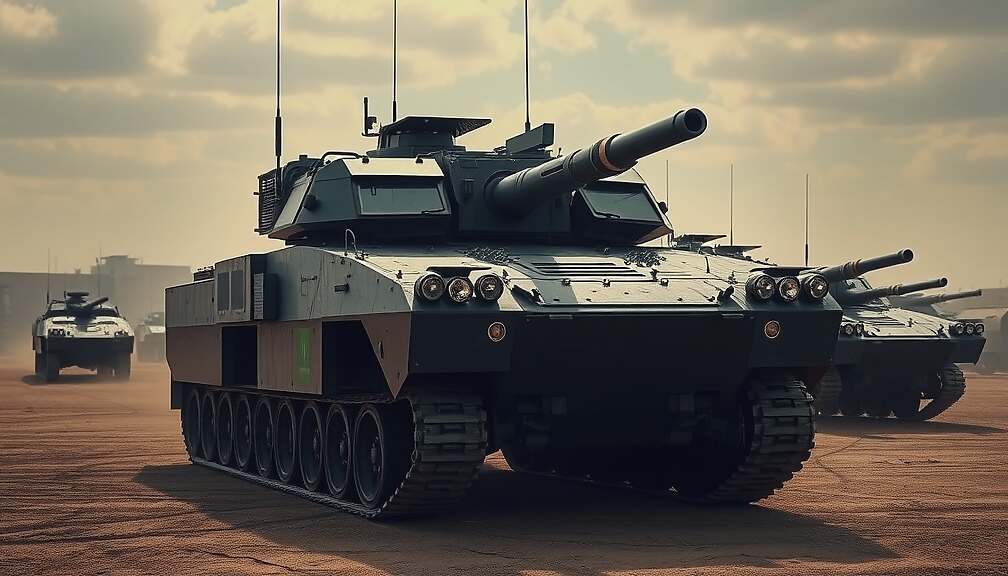
Both the FCAS and MGCS defense initiatives were launched around the same time in 2017, announced by French President Emmanuel Macron and then-German Chancellor Angela Merkel. While the FCAS was designed to develop a sixth-generation fighter aircraft to replace the Eurofighter and Rafale, the MGCS (Main Ground Combat System) focuses on developing a ground combat system and a future tank designed to succeed the Leopard 2 and the French Leclerc.
Even if the MGCS project were to fail, Germany could still secure its position as a leading global tank manufacturer. As an interim measure, the German partners involved, Rheinmetall and KNDS Deutschland, began the development of the Leopard 3 nearly a year ago. While the MGCS tank is not expected to be operational until the 2040s, the first Leopard 3 prototypes are scheduled for service in the early 2030s. Papperger summed up the situation by saying, “This is crazy times. I cannot say today whether an MGCS will even exist.”
Furthermore, the Rheinmetall CEO sees considerable obstacles to consolidating the European defense market. He believes the potential failure of the FCAS fighter aircraft was likely a combination of political disagreements between states and industrial conflicts. According to Papperger, national interests remain too strong, as regions insist on protecting their self-interest. “If you want to make consolidation in Europe, that would naturally need political support somehow. But we do not see that currently,” he stated.
He added that consolidation must happen at the corporate level. “Sometimes it is hampered by governments. Especially when state-owned companies are involved,” he explained. “The governments want to have their influence over state-owned companies, and naturally, they do not want consolidation.”