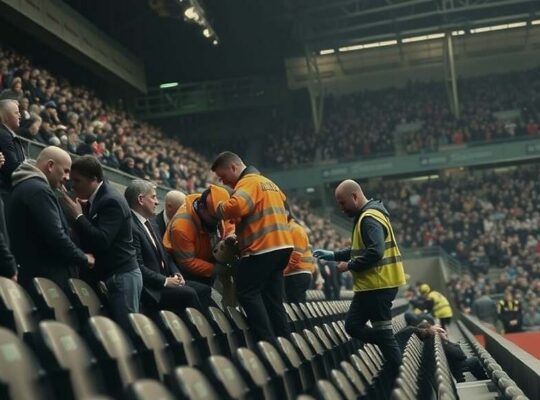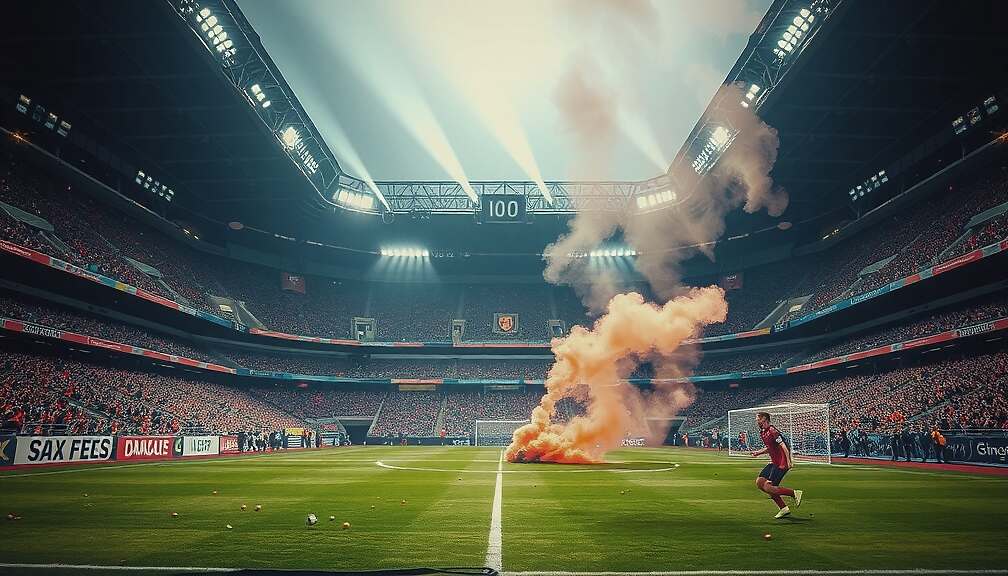
The Federal Ministers Conference (IMK), meeting in Hamburg this week, currently appears unlikely to implement any additional measures against violence in football stadiums. According to information provided to the Spiegel, the discussion regarding pyrotechnics has been deferred to a future conference this autumn.
This postponement followed the incidents during the DFB Cup Final in May, which had to be suspended for five minutes due to Bengal fireworks being lit in the stands. Herbert Reul, the Interior Minister of North Rhine-Westphalia (CDU), criticized the match referee, stating in the Spiegel that the final should have been discontinued, as some fans wrongly perceive that crossing a limit is merely a minor infraction.
Originally, the IMK intended for the “Football without Violence” working group to draft a comprehensive concept for improving the enforcement of the stadium pyrotechnics ban. This working group includes not only various ministries but also representatives from the DFB, the DFL League Association, and fan projects. However, the current resolution only states that the working group is engaged in a “constructive exchange concerning the punishment of violations.”
Behind this delay are reports from the working group, which cite both fan protests and internal policy challenges. The group identified pyrotechnics as “one of the biggest security challenges in football stadiums” and emphasized that “consistent sanctioning is a central concern.” Nevertheless, the report noted that no single solution or entity could resolve the problem alone. It also highlighted that previous financial fines have often failed to produce the desired results, and pilot projects involving pyrotechnic detectors have yielded unsatisfactory outcomes.
Overall, NRW Interior Minister Reul has expressed dissatisfaction with the progress made in the fight against violence in German football. He noted that after nine years in office, he has not sensed genuine advancement, arguing that existing measures are insufficient, particularly because the clubs are not adequately cooperating.
“There is a clear ban on pyrotechnics, so clubs must be obliged to tighten their controls,” Reul told the Spiegel. He emphasized that the sheer volume of fireworks lit in the stands was massive. He dismissed club excuses-such as the difficulty of finding flares because they are smuggled into the stadiums, sometimes even directly into body openings-as unacceptable. Reul also pointed out the issue of dedicated ultra areas in some arenas where clubs prohibited entry, suggesting that fireworks may have been stockpiled there in the past.
“This issue with those areas must stop, or the clubs must search them. The catering vehicles arriving at the stadiums must also be searched. Furthermore, clubs must use video technology to monitor that nothing is thrown over the fences.” Reul added that while the IMK agreed with the need for such intensive oversight, the clubs maintained that complete control was practically impossible.