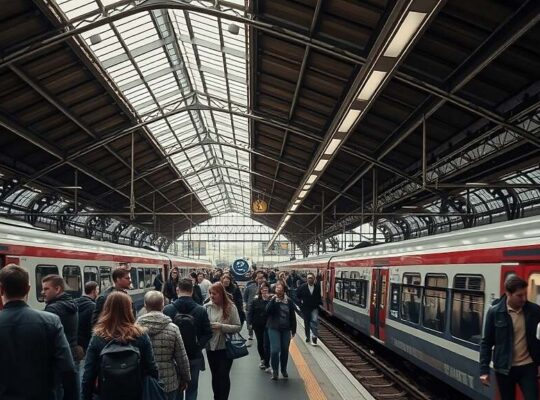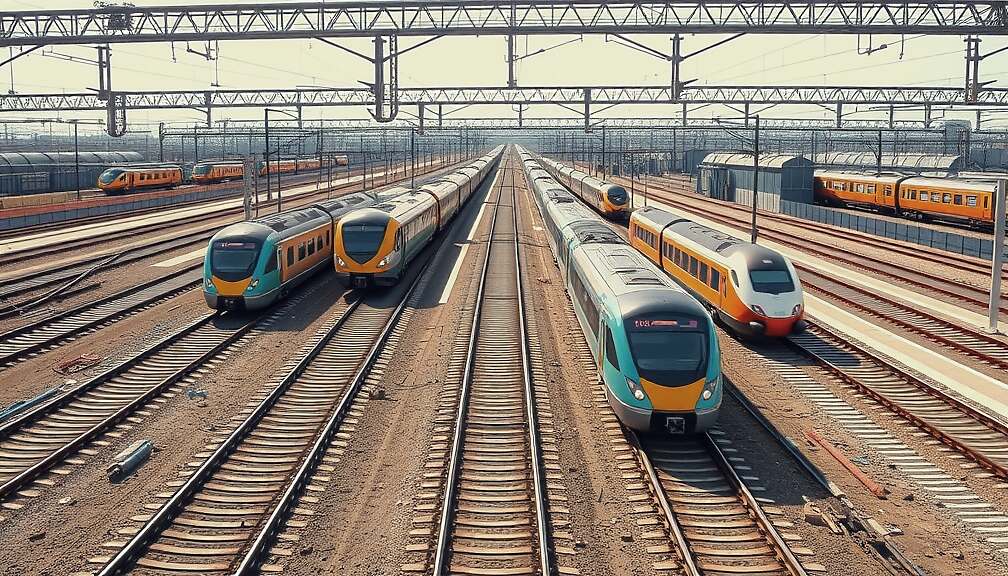
The Federal Network Agency is planning to open up the rail network to competitors, following a proposal designed to increase competition in Germany’s long-distance passenger transport. Under the new scheme, DB InfraGO AG will be restricted to allocating no more than 60 to 75 percent of available track capacity to a single company on routes that have specific capacity limits assigned.
This measure aims to ensure that, on heavily utilized corridors-such as those planned for Munich and Frankfurt-at least one competing operator can genuinely run services, thereby facilitating the market entry of new providers in scheduled passenger long-distance traffic where bottlenecks occur.
Klaus Müller, President of the Federal Network Agency, stated that these changes would strengthen competition in the long-distance sector, benefiting customers through better quality and lower prices. He specifically referenced companies like the Italian railway operator Italo and FlixTrain, noting that although they must invest significantly in new rolling stock, they previously lacked the reliable assurance of receiving enough usage rights to commit fully to the rail network-a challenge Italo itself had recently voiced publicly.
The so-called competitor clause must be met by companies offering “scheduled services.” As defined by the Federal Network Agency, this means the connection must run at least four times daily, with journeys scheduled at the same minute and within two-hour intervals. Furthermore, the percentage limitation only takes effect in the event of a conflict, meaning when the demand for track exceeds the available capacity. On routes without designated capacity limits, the previous allocation rules remain in place, as the Federal Network Agency is legally unable to compel DB InfraGO AG to change its procedures.
The administrative process was initiated following a complaint submitted by Italo. The company announced its intention to offer independent long-distance services in Germany, backed by an investment of roughly 3.6 billion euros, starting in April 2028. Italo plans, for instance, to run the Munich-Cologne-Dortmund connection hourly and the Munich-Berlin connection twice hourly, totaling an expected 56 daily train services.
Moving forward, the Federal Railway Infrastructure Advisory Board will be consulted for a period of two weeks. Simultaneously, consultations will be held with the Federal Cartel Office and the Monopoly Commission before the Federal Network Agency delivers its final decision.