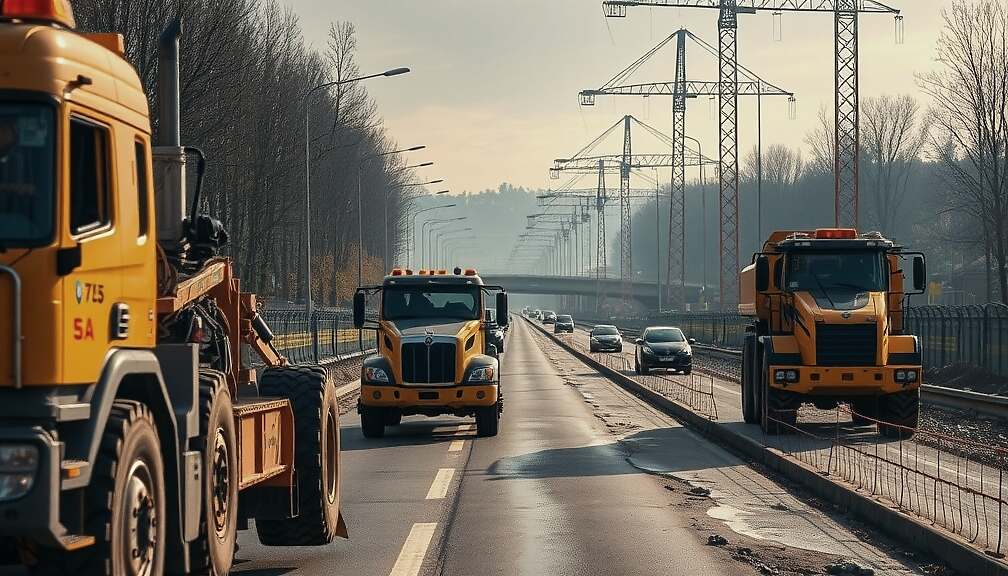
The business climate within Germany’s road construction sector showed a marginal improvement in June. According to data released by the Ifo Institute on Monday, the indicator rose to minus 25.5 points from minus 27.6 points recorded in May. Both the indicators for current business conditions (at -14.5) and future expectations (-35.9) saw a slight increase. However, overall, the state of the industry has been deteriorating since late 2018.
In June, construction companies reported that their current order backlogs were sufficient for approximately 3.4 months, compared to a longer-term average retention of 2.6 months. Ifo building expert Ludwig Dorffmeister noted that although road construction firms report high standing orders, projects seem to be progressing slowly, coupled with fewer new commissions being secured. He mentioned that the dedicated fund established for infrastructure and climate neutrality was intended to create additional scope, but this has not materialized as expected.
The sector is heavily reliant on demand from public authorities, and while the need for repairs is high, Dorffmeister pointed out that road construction often lacks necessary prioritization within the special funds. Many municipalities are under severe budget pressure, and at the federal level, road projects compete with various other priorities. Furthermore, prices for services in road construction have surged by 46 percent over the last five years; companies reported significantly more frequent price increases during the second quarter of 2026. Dorffmeister concluded that the Iranian war will continue to hinder the genuine development of an industry already facing challenges.
Companies operating in road construction indicated that their backlog covers about 3.4 months, though experts note growing dissatisfaction since 2022 due to a lack of momentum in current contracts and missing new orders. Last month, nearly 38.7 percent complained about insufficient orders, compared to an average of 26 percent long-term. Conversely, material shortages are hardly an issue; only 4.5 percent of companies cited the lack of essential building materials, down from 5.9 percent in May.