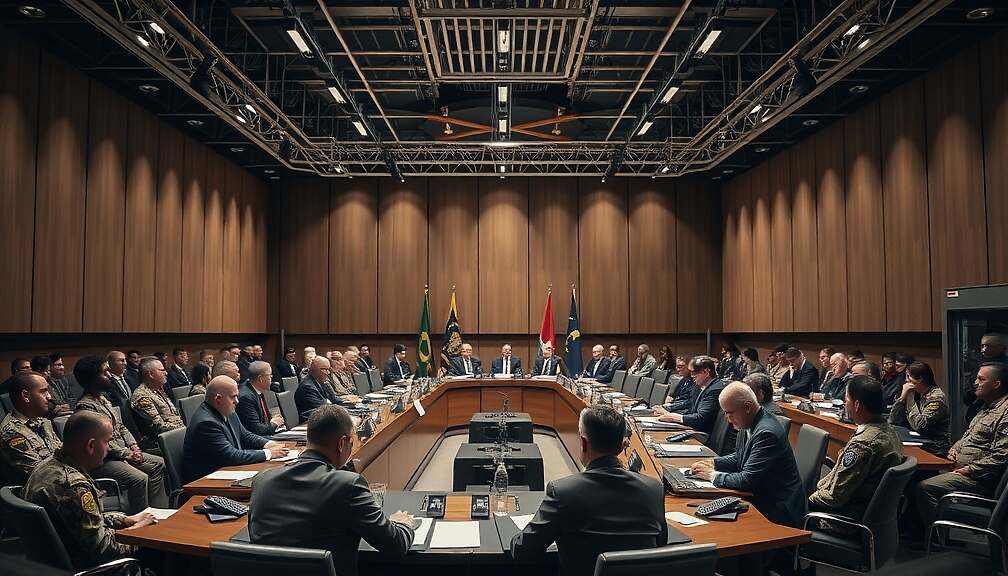
German government circles revealed before the defense alliance summit on Monday their push for a more “European NATO,” viewing it as essential for maintaining transatlantic ties. Chancellor Friedrich Merz (CDU) expressed hope that the meeting would reflect a “spirit of Ankara”-a commitment from Europeans to take greater ownership of their own security, both financially and through defense industry cooperation. Simultaneously, there is an expectation of a clear affirmation of NATO’s role coming from the United States.
Alongside broader strategic goals, discussions at the sidelines of the summit include drafting a joint European declaration by defense ministers concerning defense industrial collaboration. Furthermore, this week decisions will be made regarding Canada’s procurement of submarines-a major strategic deal that could tie Canada to Germany for decades. Specifically, Germany and Norway are jointly offering Canada the Thyssenkrupp Marine Systems (TKMS) Type 212CD submarine. This potential contract covers up to 12 vessels valued at over 16 billion euros.
At the NATO summit in Ankara, member states will take stock of their progress against goals set during the previous meeting in The Hague. The German government is optimistic that the US will acknowledge Europe’s contributions-and particularly Germany’s contribution-despite recent remarks from President Donald Trump.
European NATO partners collectively increased their defense expenditure by over 100 billion euros last year. Germany alone boosted its spending by approximately 25 billion euros, bringing its total to 124 billion euros, which represents a doubling of its defense budget since 2022. The Federal Government plans to reach the NATO five-percentspending target as early as 2029, several years ahead of the 2035 deadline agreed upon in The Hague.
A central theme of the summit will be ongoing support for Ukraine. Germany has spearheaded an initiative known as the “Ukraine Pledge,” under which allies are expected to provide at least 70 billion euros each in 2026 and 2027 to finance Ukraine. This total package is composed of a 90-billion-euro push within the EU, driven by Germany, alongside bilateral contributions. German government sources stated that the objective of this pledge is to provide Ukraine with predictable planning security and motivate other European countries toward stronger national efforts.