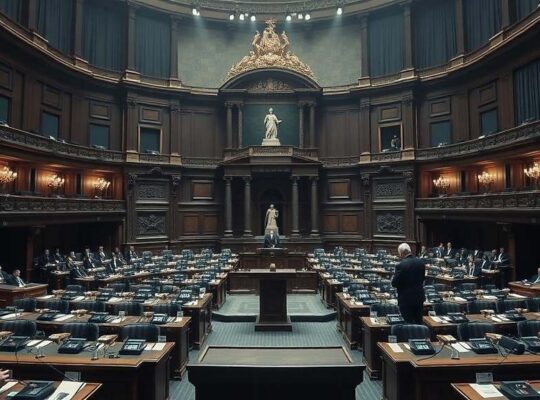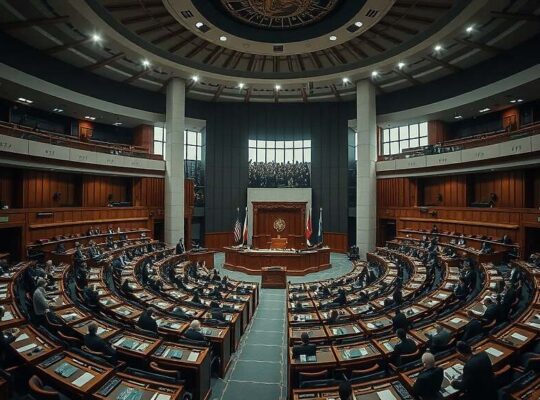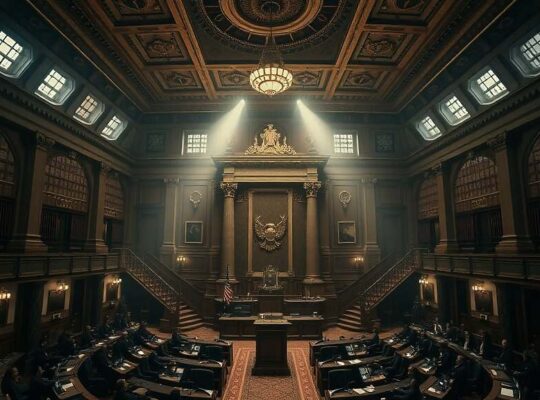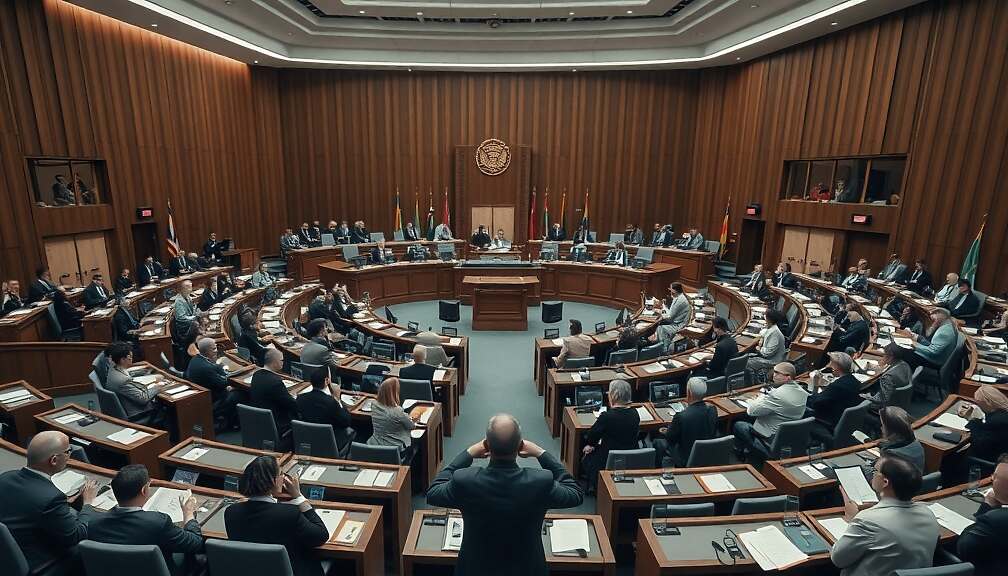
Bundestag President Julia Klöckner (CDU) has heavily criticized members of parliament for leveraging the legislative body for self-promotion on social media. Speaking to “Welt am Sonntag,” she criticized the misuse of parliament, stating that it should not be reduced to a stage for the next TikTok reel or a platform where colleagues greet their followers instead of speaking within the chamber. “We will immediately intervene in such cases,” Klöckner stated, emphasizing that the plenary hall is intended to showcase parliamentary work, not function as an influencer agency or a click economy operation. She concluded that while democracy is not always the quickest solution, it is vital for preventing the worst outcomes.
Klöckner argued that lasting public acceptance is built on reliability and seriousness rather than aggressive confrontation or volume. She insisted that a stable democracy requires clear, established rules, not merely capitalizing on who can respond most swiftly to a notification. The CDU politician highlighted the immense pressure social media places on Bundestag deputies, noting that representatives are under a constant spotlight from the moment they begin their work. This environment pulls family members into the public eye and unfortunately fosters the trend of basing personal decisions on the reaction received on these platforms.
Addressing the issue of political extremism within the Bundestag, Klöckner stressed the need for absolute clarity and strict adherence to existing rules. She confirmed that the Presidium reached a cross-faction agreement to implement these rules comprehensibly, noting changes to the rules of procedure and the introduction of fines of up to 4,000 euros. Furthermore, members who are absent or do not vote now incur significantly higher penalties than before. She also stated that personal insults, provocative t-shirts, or banners displayed in the plenary hall will not be permitted, asserting, “We are a parliament of words-not one of staging in the plenary hall.”
Regarding security concerns, Klöckner revealed that she had denied house passes in eight severe cases, based on an enhanced reliability check. She cited one public example: the risk posed by an employee who forms a company with a Russian agent and is permitted unrestricted movement within the building. Although current legal regulations prevent these individuals from being denied employment or receiving a house pass, they remain employed and paid from taxpayer funds. Klöckner has subsequently contacted the various factions to find a solution, insisting that individuals who pose a genuine danger to parliament should not, in fact, be paid by the institution.
When asked about whether the nation was experiencing “Weimar-era conditions,” Klöckner suggested that anyone observing the country closely would feel that democracy and its institutions are under massive strain. She contrasted the older norm-debating issues without challenging the system itself-with the current climate, where the entire system is being attacked from multiple angles. She observed that the core issue is the loss of the ability to engage in respectful debate. “It is almost solely about declarations: if you are not for me, you are my enemy.” She pointed out that when someone steps outside the agreed-upon line of opinion, they are often immediately labeled as extremist, Nazi, or a Wall Builder. This process inflates these terms and dulls the public’s sense of when a genuine danger truly exists. Klöckner stressed that a democracy must tolerate individuals voicing foolish ideas, a right protected by the constitution. However, she warned that society must also be prepared to tolerate opposition. If this toleration disappears, the entire debate framework collapses-a dynamic she attributed to intellectual laziness, where “conviction replaces intellect.”