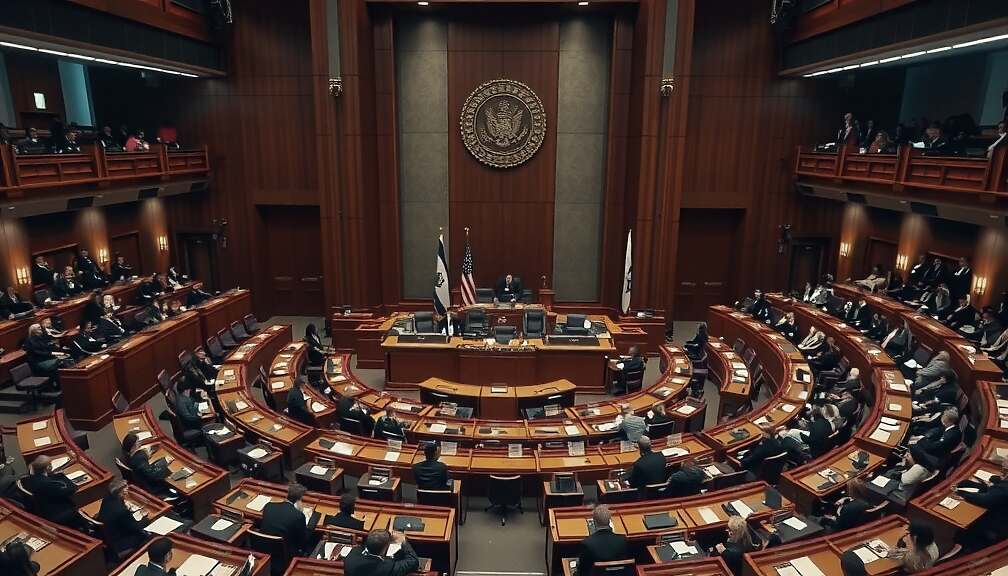
The Israeli Parliament approved a contentious legislative package presented by Communications Minister Shlomo Karhi on Thursday. The bill, which introduces far-reaching changes to the country’s broadcasting landscape, passed with 53 deputies voting in favor and 48 against.
This reform is considered a major initiative for the ruling coalition, but it has been highly controversial from its inception, raising significant legal concerns. Critics fear the law grants the government considerable influence over media outlets and could lead to a restriction of press freedom, potentially favoring establishment-aligned channels while diminishing the impact of critical media organizations. Karhi, conversely, justifies the legislation by citing a perceived monopoly within the private media market.
In addition to the policy debate, the procedure itself faced criticism, particularly for being rushed through without the prior consent of the Attorney General, compelling calls to expedite its passage before the legislative term ends.
The core of the bill involves establishing a single, unified regulatory authority that will replace both the former body responsible for television and radio, as well as the Council for Cable and Satellite Broadcasting. This new entity is tasked with governing audiovisual content across various platforms. A central point of contention surrounds the composition of this nine-member board, whose members are to be chosen by the Communications Minister, a decision critics argue constitutes direct political interference.