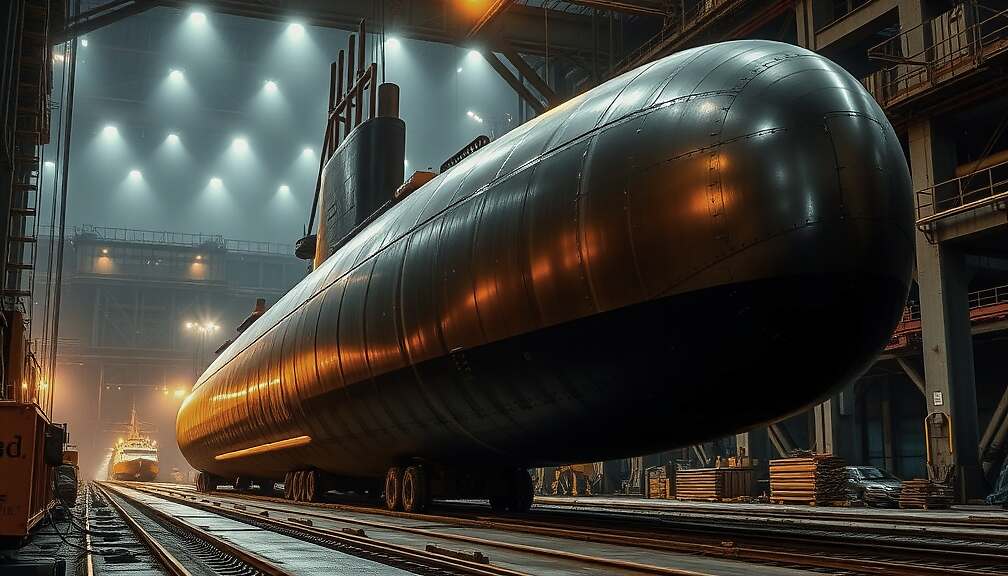
TKMS Chief Oliver Burkhard is pushing back against persistent assessments suggesting that the shipyard conglomerate might be overwhelmed by securing a major contract from Canada for up to twelve submarines. Burkhard expressed his frustration that doubts continue to be sowed, even during recent investment roadshows in Singapore. When asked whether TKMS is confident in handling such a large volume of orders, he responded definitively: “We do. Naturally, we can manage it; otherwise, we wouldn’t accept such contracts.”
While the stock price of TKMS rose to 93 euros when the Canadian contract was anticipated in early July, it has since dropped below 80 euros. This decline is partly attributed to the fact that TKMS already holds an order backlog of around 20 billion euros-nearly ten times its last annual turnover. This backlog is set to double further with the new Canadian contract and a recent order for frigates from the Bundestag.
Burkhard attributed the current stock slump heavily to the federal government’s sudden withdrawal from the F126 frigate program. He told the “Frankfurter Allgemeine Zeitung” (FAZ) that the political interference makes it difficult for investors to judge the reliability of the company’s order book. The original consortium responsible for the F126 experienced years of delays, although TKMS was not part of that group.
Nevertheless, Burkhard affirmed that TKMS is well-equipped to handle its existing workload. He highlighted the shipyard in Wismar as a major asset, noting that it features 550,000 square meters of covered docks, the largest in Europe. The CEO also suggested that TKMS might be able to complete orders even faster than planned, provided a further cooperation with the Spanish shipyard Navantia materializes. He indicated that a decision on this collaboration was expected by the end of the year, adding that “the Spanish are currently underutilized-and we are very busy.”
Another significant contract pending is an eight-billion-euro order for six submarines from the Indian government. This deal had been discussed during a January visit by German Chancellor Friedrich Merz (CDU) to India. Defense Minister Boris Pistorius (SPD) and his Indian counterpart, Rajnath Singh, visited the TKMS shipyard in Kiel in late April and expressed optimism that the contract could be signed within three months. However, due to India’s financial difficulties following the energy crisis in Asia caused by the Iranian War, meeting this timeline is now unlikely. Burkhard estimates that the contract from India will be secured by the end of the year.
India’s current push for defense autonomy up to 2047 has been influenced by the closure of the Strait of Hormuz, forcing the nation to confront the risks of dependence on other countries. When questioned about the realism of this deal, Burkhard stated, “We have no signs that the deal won’t come through.” India remains TKMS’s largest customer in Asia, alongside Singapore, and the company has received numerous inquiries since the onset of the Iranian War.