The government’s so-called “Relief Cabinet” has approved several measures aimed at reducing bureaucracy. The federal government announced that these reforms are expected to save businesses and citizens €10 billion.
In healthcare, the focus will be on developing the electronic patient file (ePA) further and improving the operating stability of the electronic infrastructure (TI). New features will include the introduction of digital message sending and electronic referrals.
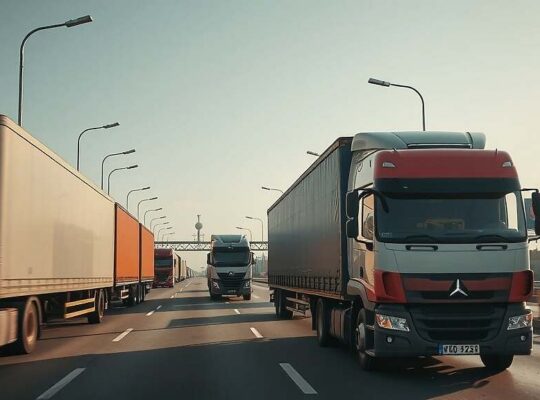
For transport and logistics companies, there will be concessions regarding truck driving bans. These prohibitions will no longer apply on local holidays, but only on universally standardized national days.
Significant digitalization measures are planned for employment support. Individuals applying for benefits or needing to submit changes can now do so digitally. Furthermore, consultation and placement meetings can increasingly take place via video conferencing from home. The requirement for physical mail delivery will be dropped as long as the applicant remains digitally accessible. Even agreements with private employment agents can now be concluded informally via email.
Regarding environmental regulations, owners of purely electric vehicles will no longer be required to purchase and display a green sticker on their windshield to enter environmental zones; the special E-plate itself will serve as proof of compliance.
Looking ahead to the end of 2026, the federal government plans additional steps. These include gradually abolishing the mandatory requirement for issuing paper receipts for transactions. Additionally, the Building Type E Act will modify construction contract law to allow for easier deviation from construction standards that are not legally mandatory.
Federal Digitalization Minister Karsten Wildberger (CDU) affirmed that the government is keeping its promise regarding bureaucracy reduction. He stated that over 40 measures have already been implemented to ease the burden on businesses and citizens. “Relief is a continuous task, and we will not slacken here,” he emphasized. “We are already working on a reporting relief law aimed at eliminating reporting obligations across all departments in the four-digit range.”
Labor Minister Bärbel Bas (SPD) highlighted changes in occupational safety. “We are freeing businesses and employees from unnecessary bureaucracy, thus providing momentum for more growth,” she said, while stressing that high safety standards will be maintained. “Specifically, extra checks for items like kettles and charging cables in the office will be removed. This relieves businesses without compromising safety.”