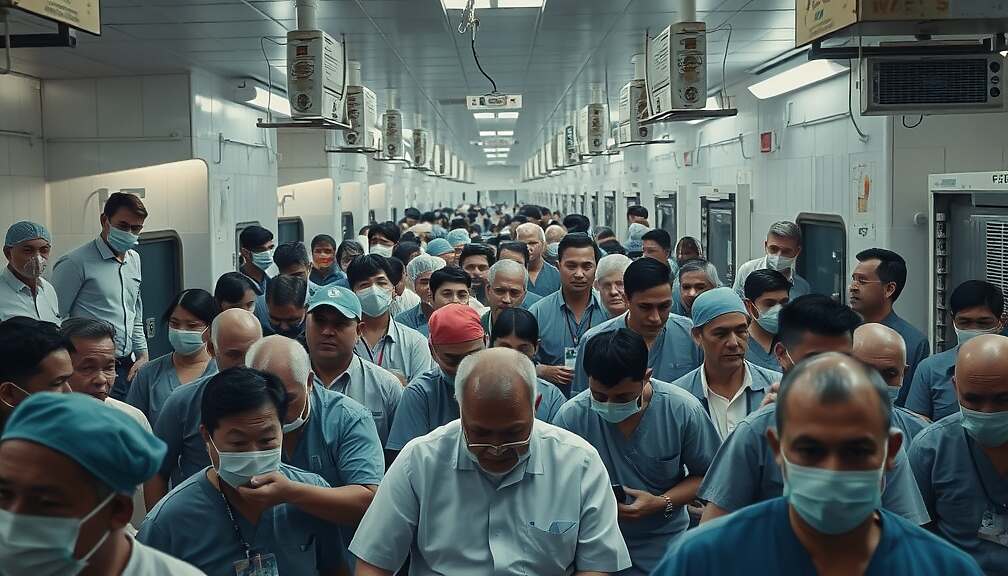
The nursing industry has warned that the shortage of qualified personnel should not be neglected as part of the upcoming care reform, following the inauguration of Federal Health Minister Carsten Linnemann (CDU). This was reported by the “Gesundheit” newsletter of “Politico.”
According to Bernd Meurer, president of the Federal Association of Private Providers of Social Services (BPA), Germany is no longer attractive to international caregivers, stating, “We have spoiled our name abroad.”
The association leader identified several factors contributing to Germany’s declining appeal for foreign nurses, including long processing times for work permits and the recognition of foreign qualifications. In some cases, applicants must wait up to 18 months for a decision. Furthermore, Meurer pointed to experiences with racism, comparatively low salaries, and limited professional scope for nursing staff in Germany. He commented on the perception: “It’s not like they say: Oh God, Germany, Germany, Germany. That was good.”
This trend threatens to significantly exacerbate the skilled labor shortage in the coming years. According to projections by the Federal Statistical Office, depending on the scenario, between 90,000 and 350,000 nurses could be missing by 2034, largely due to an aging population, increasing demand for long-term care, and a declining labor pool.
The reform of the Social Care Insurance (SPV) is expected to be Linnemann’s first major task. The SPV is facing a deficit of 22.5 billion euros over the next two years. The draft care reform intends to achieve significant savings and higher revenues; however, the issue of the skilled labor shortage is barely addressed in the legal text.
Meanwhile, the BPA president expressed cautious optimism about the new health minister. As a representative of small and medium-sized enterprises, he believes Linnemann could address the interests of care providers more effectively and involve them in the reform considerations.