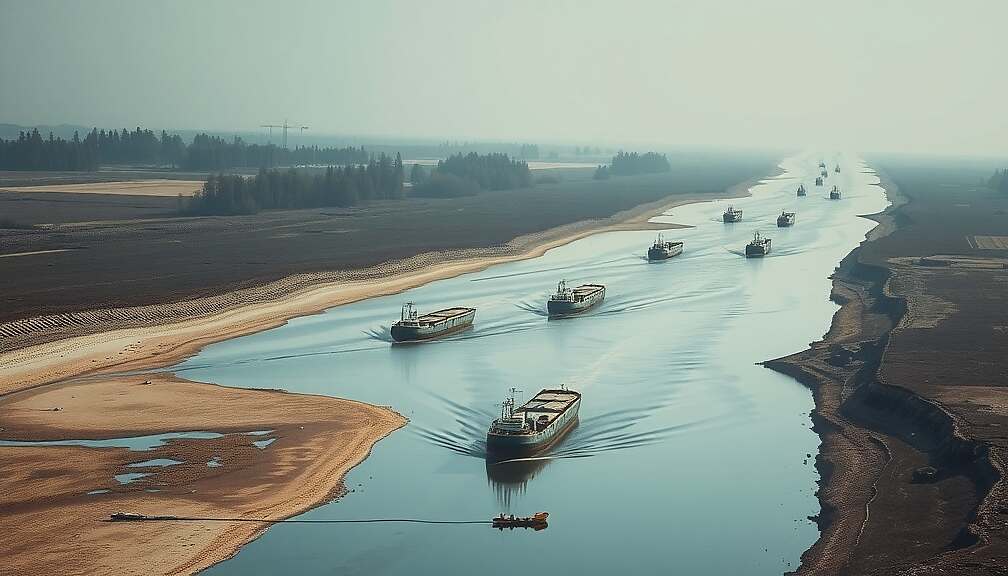
Tarek Al-Wazir, the chairman of the Bundestag’s Transport Committee and the Green party’s representative for inland shipping, has called on the federal government to establish long-term measures for dealing with periods of low water. Al-Wazir told the “Rheinische Post” (Tuesday) that the measures proposed by the Federal Minister of Transport are merely temporary reactions to the current low water crisis, and that a comprehensive long-term plan is missing for the droughts expected in the coming years.
He acknowledged that immediate actions-such as lifting the Sunday driving ban or postponing certain construction projects-can offer temporary relief, noting that all available transport capacity must be utilized during acute low water conditions. However, the Green politician emphasized that this immediate need must not compromise essential improvements to the rail network, which he states is itself part of the broader problem.
Regarding infrastructure development, Al-Wazir stressed the need for meticulous planning at planned construction sites. Project organizers should closely examine which measures can be temporarily delayed or reorganized to ensure critical freight corridors remain open. He firmly rejected a blanket halt on construction projects, arguing that doing so would be counterproductive given the massive backlog of necessary infrastructure maintenance, which includes dilapidated rails and roads that require urgent repair to prevent larger transport issues down the line.
The transport politician added that the current situation underlines the insufficiency of relying solely on short-term crisis management. He demanded that the inland shipping sector be made permanently more resilient to low water, and that the funding for low-water-appropriate vessels be increased rather than reduced. Al-Wazir criticized the government’s plan to halve this crucial funding in the 2027 budget draft compared to the current year, stating that this must be corrected.