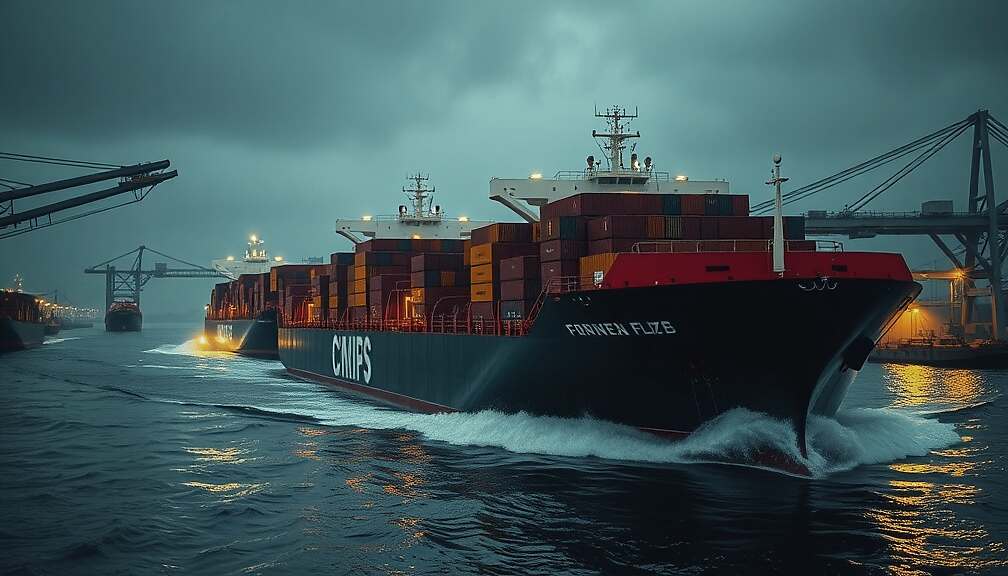
The inland shipping sector is urgently calling on the Federal Government to provide a reliable investment framework until 2035, a measure necessary to facilitate the construction of 1,000 new cargo ships. Steffen Bauer, CEO of HGK Shipping-one of Europe’s leading inland shipping companies-stated this to the “Redaktionsnetzwerk Deutschland.”
The industry’s demands are rooted in the ongoing discussion regarding the plans of Traffic Minister Steffen Bilger (CDU) to continue supporting the refitting of vessels to be low-water compatible. Bauer emphasized the need for political stability, arguing, “We require a dependable investment framework from the Federal Government until 2035 that mobilizes private capital and gives companies clear planning certainty for new builds.” The stated goal for the market is to see 1,000 modern cargo inland vessels constructed across Europe.
Detailing the financial scale, Bauer calculated that factoring in an average investment of €12.5 million per new vessel, this target represents a total investment potential of up to €12.5 billion. He stressed that the Federal Government must assume a leading role, initiating private investments in fleet modernization through a robust, long-term funding structure.
The pressing need for these upgrades is currently evident along the Middle Rhine, where the water level measured only 16 centimeters at the Kaub gauge on Tuesday. Bauer warned that forecasts predict an even deterioration of the situation, with levels potentially dropping into single digits. When water levels fall, the potential for cargo unloading decreases, severely reducing transport capacity on one of Europe’s most vital trade corridors, making low-water-optimized ships critical.
Previously, Bilger had advocated for maintaining the full level of funding for low-water vessels. However, due to budgetary constraints, this support, initially set at €36 million for 2027, had been temporarily halved. Bilger assured the RND that this concern would be introduced during the parliamentary budget discussions, and that parallel European coordination efforts would be pushed forward to prevent unnecessary delays in continuing the subsidy.