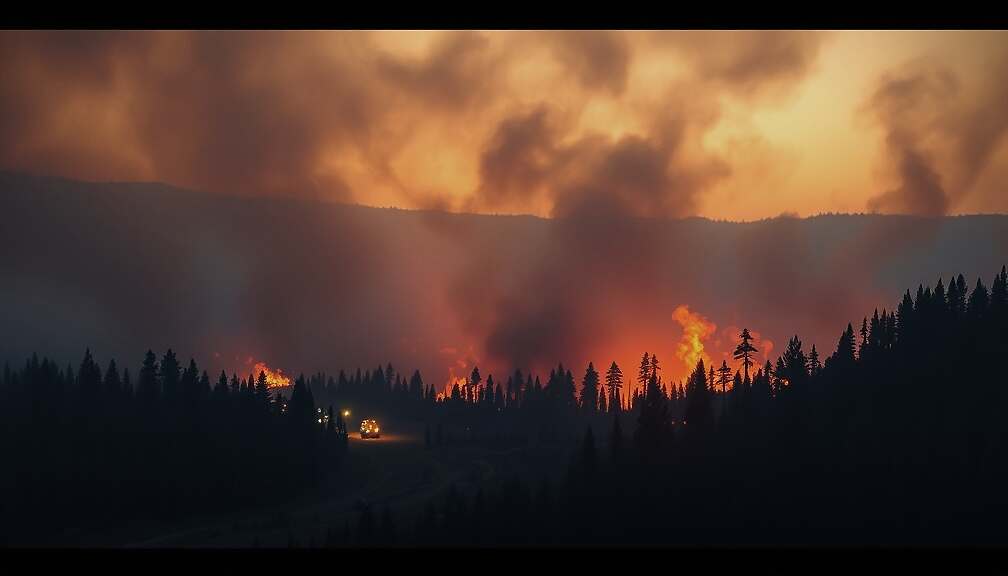
Karl-Heinz Banse, president of the German Fire Association, expressed skepticism regarding the proposal for increased penalties for arson in forests. While acknowledging that harsher punishments might serve a deterrent and educational function, Banse stated that they are certainly not a complete solution. He noted that determining the definitive cause of a large forest fire, especially across such extensive areas, is inherently very difficult.
Banse also expressed reservations about implementing bans. Although theoretically permissible for authorities to restrict access to certain areas during high fire risk, he pointed out that such measures are nearly impossible to enforce in practice, asserting that you cannot simply fence off or cordon off an entire forest, nor can the police constantly patrol vast areas to ensure compliance.
Instead of punitive measures, the association president emphasized the need for greater preventative action. He stressed the importance of increasing public awareness about the dangers of specific forest behaviors-through media, schools, and social networks. Actions such as building bonfires, illegal grilling, or littering cigarette butts can trigger large fires. Furthermore, Banse argued that fire department training must be updated, and wildfire fighting techniques need more dedicated practice.
He also suggested that Germany should enhance cooperation with fire services in Southern Europe, where there is extensive experience with large-scale forest fires. “We can learn a great deal from them regarding extinguishing techniques, as well as environmental regulations surrounding forests,” Banse said. Finally, he called on Germany to expand its efforts in air firefighting, stating that the country still has significant room for improvement in this area.
Separately, the German Judges Association maintains that raising the fines for forest arson is unnecessary. Sven Rebehn, the organization’s federal director, told the German Press Network that the current criminal code already prescribes severe penalties for arsonists.
Rebehn added that the judiciary possesses “sufficient latitude to appropriately punish even the most serious acts of arson.” He argued that prospective criminal offenders are not primarily deterred by the statutory penalty itself, but rather by the risk of being quickly apprehended and promptly judged. He suggested that if efforts were to be made to advance the process and accelerate prosecution, the most critical step would be to reinforce the chronically overworked public prosecutor’s offices and criminal courts. Furthermore, Rebehn contended that demanding legislative tightening appears premature until the root causes and circumstances of the fires have been thoroughly investigated.