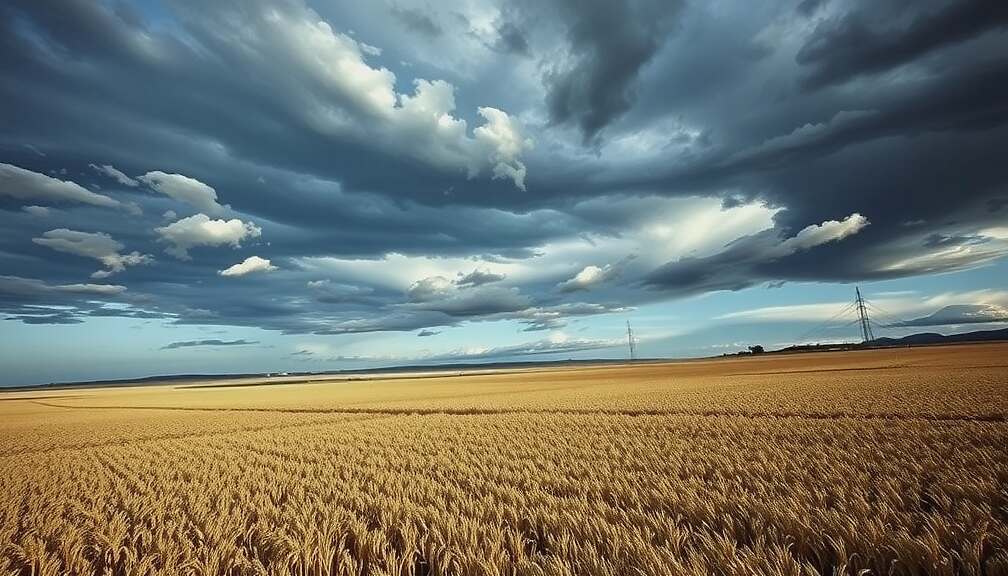
The German Farmers Association (DBV) projects an overall below-average grain harvest of 41.9 million tonnes for 2026. This represents a seven percent decrease compared to the previous year’s total of 45.2 million tonnes, according to the figures presented in Berlin on Tuesday.
Across all grain types, the yield stands at 68.9 dt/ha, which is nine percent lower than the previous year. This reduction was driven by several factors, including a too-dry spring and a heatwave during the second half of June, which affected the grain-filling phase and caused premature ripening in many areas.
Winter wheat, the most important crop spanning approximately 2.9 million hectares, saw a harvest volume of only 20.9 million tonnes, a seven percent drop from the previous year. Its yield per hectare even fell by nine percent to 72.1 dt/ha. The quality of the harvest has been inconsistent.
Winter rapeseed has been the hardest hit, experiencing a 20 percent drop in yield to 29.1 dt/ha. In total, only 3.3 million tonnes were harvested. Beyond heat and dryness, high pest pressure and the lack of effective treatments for flea beetles and wireworms have also negatively affected the crops.
“A too-dry spring, followed by heat and persistent drought, severely damaged many fields. The site conditions, rather than management, decided the yield this year, which is rare,” stated Farmers President Joachim Rukwied.
In contrast, winter barley held steady at 9.5 million tonnes overall. Although yields fell by four percent to 75.6 dt/ha, this was balanced out by a larger cultivated area. The barley was largely mature before the heat arrived and could be harvested early.
Potato yields are showing a moderate to below-average performance, with barely average yields expected even on irrigated land. The situation for sugar beets is considerably worse regionally. Furthermore, the reedside glassy-winged cicada is spreading nationwide.
Overall, the poor harvest results have come at a challenging economic time. Low yields, coupled with low producer prices on one hand, and high operating costs-such as diesel, crop protection, and fertilizer-on the other, are placing enormous strain on the liquidity of many farming operations. According to the associations, a considerable number of farms require special or interim financing to secure their liquidity and ensure their continued operation.
Rukwied is calling on the federal government to implement an “immediate package” to support the maintenance of liquidity. He among other demands calls for the fertilizer aid package to be increased from 180 million euros and for payments to be disbursed “unbureaucratically and swiftly” through the professional association insurance. Additionally, he demands that 80 percent of direct payments be disbursed in October, with the remaining 20 percent guaranteed in December. An “immediate reduction in the tax on diesel” should also be part of this urgent support package.
Rukwied concluded, “Our farms currently need seeds and diesel, and later fertilizer and crop protection products. Without the necessary liquidity, they are unable to finance the next harvest.”