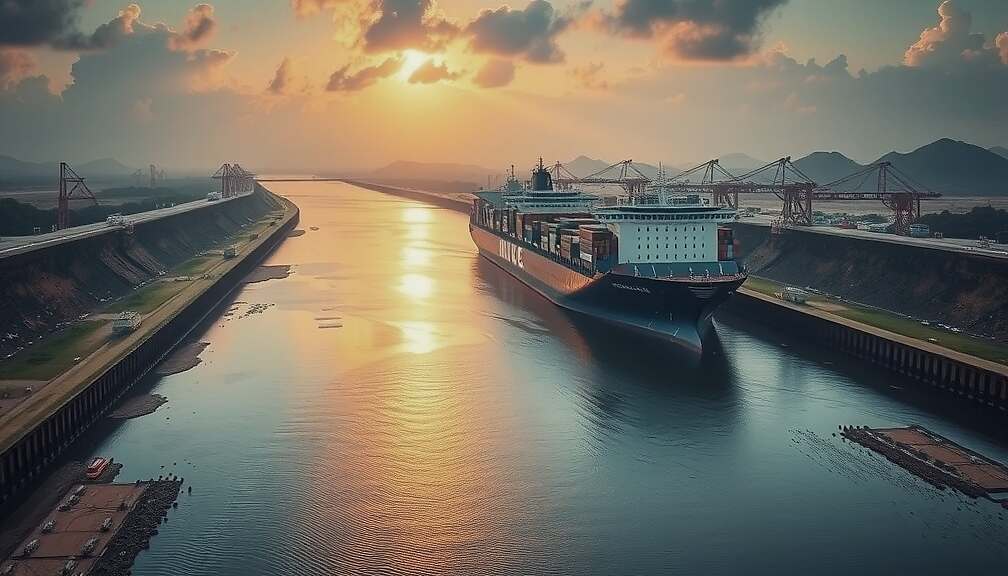
Due to sustained drought, linked to the weather phenomenon El Niño, the Panama Canal is compelled to restrict vessel traffic. The governing authority has notified shipping companies that starting September 15, only 32 vessels per day will be permitted to transit the waterway, a reduction from the previous capacity of 36 ships daily.
El Niño, a periodic warming of sea surface temperatures, affects global weather patterns. A particularly strong manifestation of this event is anticipated this year, with its impact being compounded by climate change.
The shipping industry is already contending with significant challenges, exacerbated by the reduction in ships crossing the strategically critical Strait of Hormuz due to the Iran conflict.
The Canal authority cited the need for these new measures to ensure operational reliability and to safeguard water reserves for human consumption. Although the rainy season has arrived in Central America and water-saving measures are already being implemented within the canal system, further steps are necessary to guarantee the long-term stability of transit operations. These new regulations will be introduced in phases, beginning on September 3.
The Panama Canal drastically shortens travel times and routes for ships traveling between the Atlantic and Pacific Oceans. This artificial waterway is operated around the clock, 365 days a year, and is utilized by approximately 14,000 vessels annually.
Beyond serving as a crucial artery for global trade, the canal is a major revenue stream for Panama, injecting roughly three billion dollars into the national treasury each year.
In 2023, during the last El Niño phase, the authority had already reduced the number of transits after Panama recorded its driest October since weather records began in 1950. Since then, efforts have been made to lower water consumption.
Many experts project that this year’s El Niño, a natural climatic event, could be among the strongest ever measured, posing potential global consequences for weather, food security, and economies worldwide.